The Executive Edge What Bangalore’s Professional Men Are Quietly Doing About Their Hair, Skin & Smile
The Executive Edge
What Bangalore's Professional Men Are Quietly Doing About Their Hair, Skin & Smile
A guide for the founder closing his fourth term sheet of the quarter, the CXO living out of back-to-back video calls, and the professional who hasn't taken a proper break in eighteen months - on what's genuinely changed in male aesthetic medicine, and what's worth your limited time.
It's Not Vanity. It's Due Diligence.
It usually starts with a thumbnail. A video call freezes on an unflattering frame, and the man looking back is heavier under the eyes, greyer at the temples, more tired than he feels most mornings. Or it's the company website's "leadership" page, where the headshot was taken four years and one stressful funding round ago. Or it's simply standing next to a colleague a decade younger at the same client pitch, doing the same job, and noticing the gap the camera keeps confirming.
None of this is really about wanting to look like someone else. It's about the growing awareness that in a career built on video calls, conference stages, LinkedIn profiles, and client-facing meetings, appearance has quietly become part of the professional toolkit - the same way a well-cut blazer or a firm handshake always was. What's changed is that men are finally willing to do something about it, and they're doing it the way men tend to do most things: privately, efficiently, and without much fanfare.
A haircut upgrade turns into a proper skincare routine. A skincare routine turns into an expert consultation for the acne scars that have sat there since college. And somewhere in a lunch break between two meetings, a growing number of Bangalore's professional men are quietly getting their first Botox appointment, telling almost no one, and getting back to work an hour later looking, simply, a little less exhausted.
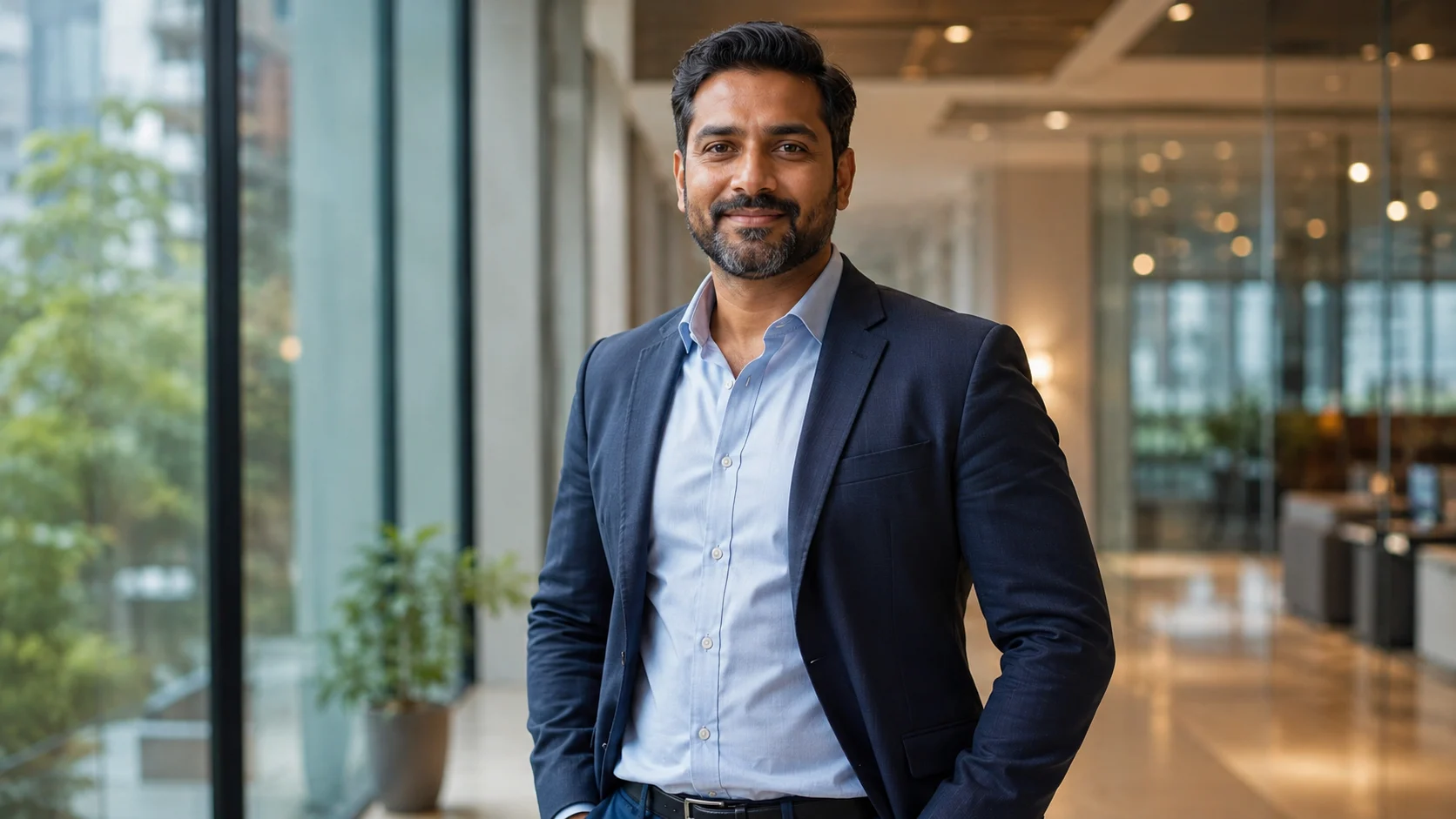
The market is responding to exactly this shift. India's men's cosmetics and grooming category is now projected to grow at roughly 13% a year through 2033 - meaningfully faster than the beauty and personal care category as a whole. That's not a niche trend anymore; it's one of the fastest-moving segments in Indian consumer health.
What Industry Research Is Now Confirming
A 2026 industry analysis on male aesthetics described male cosmetic procedure growth as consistently outpacing the overall aesthetic industry's expansion for the past two years running - a pattern researchers now frame as a genuine demographic shift in who seeks treatment, not a passing trend confined to celebrities and influencers.
The Numbers Behind the Quiet Shift
Aesthetic medicine for men has existed for decades. What's new is the scale, the acceptance, and how ordinary it has become to talk about - at least once you're past the first appointment.
There's also a career-stage story hiding in the data. Aesthetic treatment usage in India is concentrated most heavily in the 35-50 age bracket - the exact window in which most professionals are hitting their highest-visibility years at work: leadership roles, client ownership, board exposure, and the kind of career momentum where looking as sharp and rested as you feel starts to actually matter.
What's driving it isn't a single factor - it's several converging at once.
-
🎥
The camera never turns off.Video calls, company profile photos, conference panels, and social media have made most professional men more photographed and recorded today than at any other point in their careers.
-
💼
Careers are longer, retirement is later.Forty-five is now mid-career, not late career. Staying visibly sharp for another fifteen to twenty working years has become a practical consideration, not a vain one.
-
📱
Visible peers have normalised it.Public figures, athletes, and colleagues openly discussing hair transplants, skin treatments, and Botox has quietly dismantled the old assumption that these treatments were "not for men."
-
🔬
The technology has matured for male anatomy.Modern techniques are specifically calibrated around thicker male skin, stronger facial musculature, and masculine facial proportions - designed to preserve structure and character, not soften it away.
The goal has never been to look like a different person. It's to look like the most rested, least depleted version of the one you already are.
The Concerns Men Actually Raise
Strip away the marketing language, and the same handful of concerns come up in almost every consultation with a professional man in his late twenties through his fifties. This guide walks through each of them in the order they tend to surface - what's driving it, what the research says, and what a considered, non-surgical-first approach actually looks like.
The Hairline Conversation: PRP/GFC or Transplant?
Hair is usually the first concern that brings a man to a consultation, and it's also the one surrounded by the most confusion, misinformation, and frankly, unqualified advice.
The numbers are worth sitting with. Population studies among Indian men aged 18 to 50 have recorded hair fall in roughly 6 in 10 men, with visible balding present in about half. It is, statistically, closer to a norm than an exception - driven overwhelmingly by androgenetic alopecia, a genetically programmed sensitivity of scalp follicles to dihydrotestosterone (DHT), a byproduct of ordinary testosterone metabolism. It is not, in the vast majority of cases, caused by stress, shampoo choice, or "bad genes on one side of the family" in the folk sense most men have heard. It is a progressive, largely predictable biological process - which is precisely what makes it treatable if addressed early, and why waiting rarely helps.
Staging the Problem Before Choosing a Treatment
The most useful tool here is the Norwood scale - a seven-stage classification developed by Dr. O'Tar Norwood and still the standard reference for male pattern hair loss. It matters because the honest, evidence-based answer to "PRP or transplant?" depends entirely on where a man's hair loss currently sits on that scale - not on preference, budget, or what a friend chose.
| Norwood Stage | What It Looks Like | Best-Suited Approach | Why |
|---|---|---|---|
| Stage 1-2 Mature hairline |
Minimal or no visible recession; hairline may look slightly higher than in one's twenties | Preventive: scalp health protocol, Mesotherapy, maintenance GFC/PRP | Follicles are largely intact. The goal is preservation, not restoration - the cheapest and most effective stage to intervene at |
| Stage 3 The turning point |
Deepening temple recession into a defined M- or U-shape; the first stage clinically considered "balding" | GFC/PRP as primary regenerative therapy, sometimes paired with early transplant for hairline definition | Follicles are miniaturising but still biologically active - regenerative therapy has the most to work with here |
| Stage 4-5 | Significant frontal and crown thinning; a defined bald patch begins to form at the vertex | Hair Transplant (FUE), supported by ongoing GFC/PRP for surrounding existing hair | Fully bald zones no longer respond to regenerative therapy alone - a transplant physically relocates permanent, DHT-resistant donor follicles |
| Stage 6-7 | Extensive loss; only a horseshoe band of hair remains at the sides and back | Transplant with conservative, realistic hairline planning; careful donor-area assessment | Donor supply is finite at this stage - expectation-setting and precise planning matter more than at any earlier point |
A Word on Choosing Where You Go
India's hair restoration sector is growing faster than almost any other aesthetic category - which is exactly why it has also attracted under-qualified operators promising unrealistic density at rock-bottom prices. Donor hair is a finite, non-renewable resource. A transplant performed by an inexperienced practitioner cannot be undone or redone cleanly. This is a decision worth making with a qualified, experienced doctor - not the lowest quote you receive.
GFC/PRP Hair Therapy
Your own platelets, concentrated and reintroduced into the scalp, deliver growth factors directly to miniaturising follicles. The gold standard supportive therapy for Norwood 1-3, and a valuable companion treatment at any later stage.
Explore GFC/PRP Hair Therapy →Exosome Hair Restoration
A blood-draw-free regenerative option using cell-signalling nanoparticles to activate dormant follicles and improve scalp microcirculation - a strong choice for men who prefer fewer sessions with a similar results timeline.
Explore Exosome Hair Restoration →Hair Mesotherapy
Direct micro-injections of biotin, peptides, and scalp-nourishing actives - an excellent starting point for Stage 1-2 hairlines, or a maintenance protocol between GFC sessions at later stages.
Explore Hair Mesotherapy →Hair Transplant Surgery
Precision follicular extraction from a genetically stable donor zone, relocated to thinning or bald areas for permanent, natural-density coverage - planned around a natural-looking hairline, not maximum density at any cost.
Explore Hair Transplant Treatment →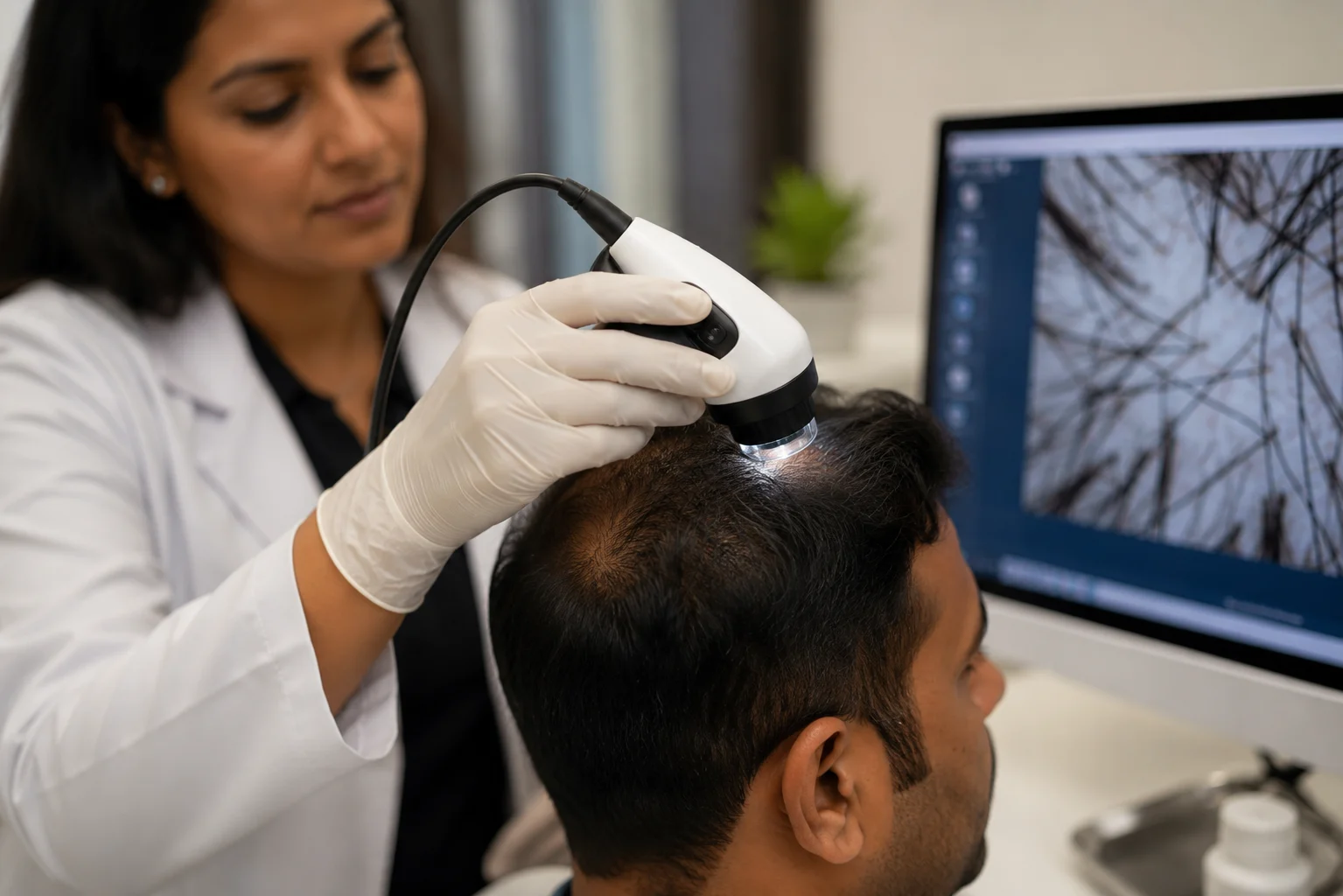
The Dandruff Problem Nobody Outgrows
Dandruff is treated as a minor, almost comic concern in most conversations - until it becomes a persistent, visible embarrassment on a dark blazer during a client meeting, or a factor quietly working against hair density.
India has one of the highest recorded rates of dandruff globally, affecting an estimated 70% of Indian men at some point - driven by a combination of climate variability, sebum production patterns, and Malassezia yeast overgrowth on the scalp. Among younger men specifically, dandruff is also one of the most commonly reported triggers connected to accelerated hair shedding, which is why it deserves more clinical attention than the average anti-dandruff shampoo aisle suggests.
Not all flaking is the same condition, and this distinction matters for treatment. Simple dry-scalp dandruff is usually mild, seasonal, and responds to consistent care. Persistent, itchy, or inflamed flaking that doesn't resolve with over-the-counter shampoos over several weeks is more often seborrheic dermatitis - a chronic inflammatory scalp condition that requires targeted dermatological management before any regenerative hair therapy is likely to work at its best. Treating hair loss while an underlying inflamed scalp goes unaddressed is one of the most common reasons regenerative treatments under-deliver.
Brotox, Masseter Botox & the Executive Face
Men's skin ages differently to women's - thicker, more sebum-rich, and slower to show early lines. But when the change does arrive, it often arrives faster and more noticeably, precisely because it was less anticipated and less prepared for.
"Brotox": Subtle Wrinkle Management for Executives
Botox for men - informally called "Brotox" - is the same botulinum toxin used in any Botox treatment, but applied with a distinctly different technique and dosing philosophy. Men typically have thicker skin and stronger, more resistant facial muscles than women, which usually means higher unit dosing is required to achieve a visible effect. Male brows are also kept flatter and less arched during treatment - a technique detail that matters, since female-style lifting techniques applied to a male brow can produce a subtly "surprised" or feminised look that most men actively don't want.
The three areas men most commonly ask about are the frown lines between the brows (the single most requested area, since these lines create a perpetually tense or irritated look in meetings and on camera), horizontal forehead lines, and crow's feet. The objective across all three is consistent: soften the lines that read as tired, stressed, or older than a man feels - without freezing expression or creating an obviously "done" look. Most men prefer to start with a light preventive dose in their mid-to-late thirties, well before lines become deeply etched, since early intervention consistently produces the most natural-looking long-term results.
Masseter Botox: Jawline Slimming Meets Bruxism Relief
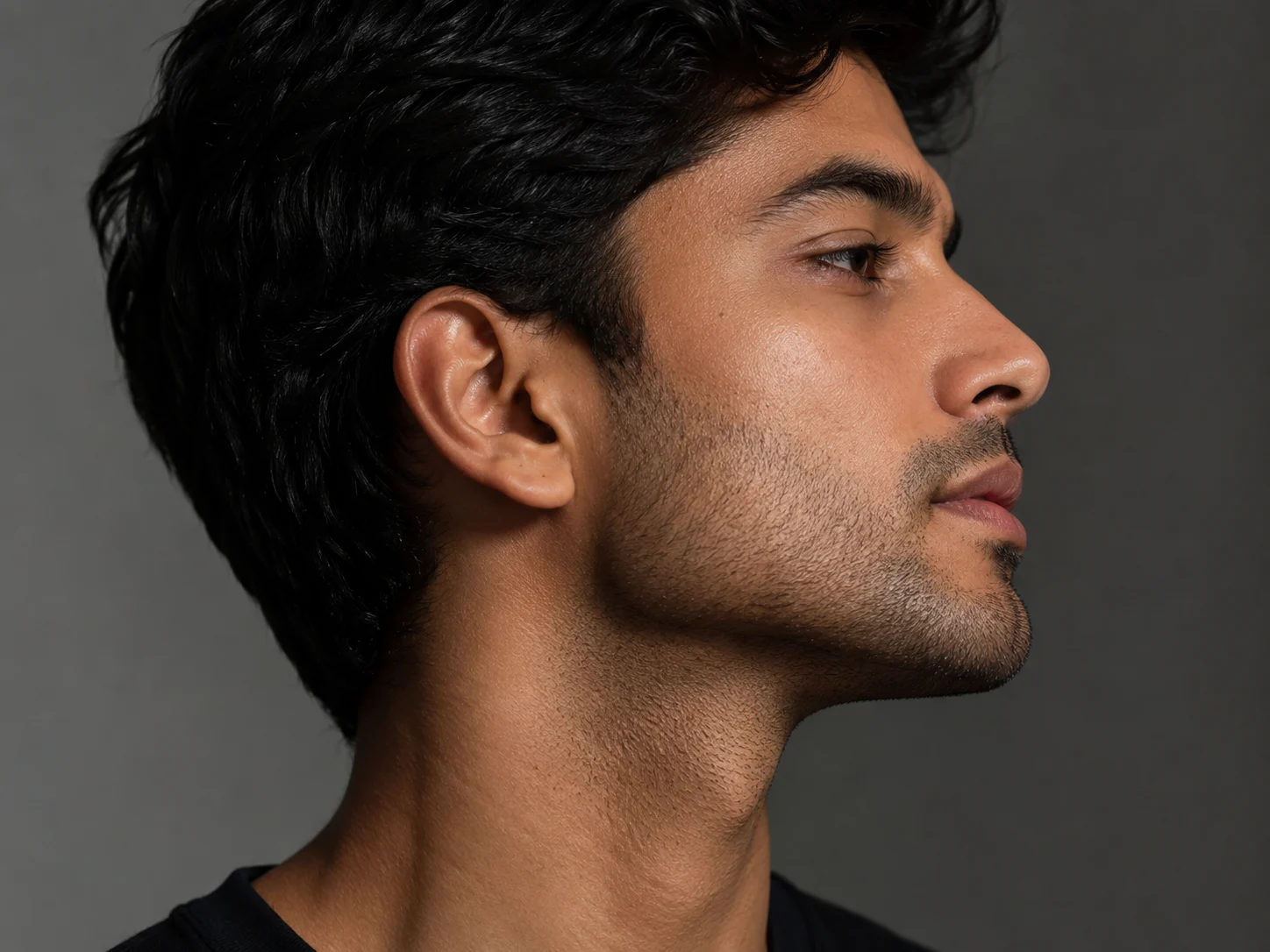
This is, for many Bangalore executives, the single most relevant treatment in this entire guide - because it solves a problem most men don't realise is connected: stress-related jaw clenching and teeth grinding, known clinically as bruxism.
The masseter is the strongest muscle in the face, running along the angle of the jaw, and it works overtime in anyone who unconsciously clenches under pressure - which describes a significant share of high-stress professional life. Chronic overuse causes the muscle to enlarge over time, producing the square, heavy-set jawline some men carry, along with morning headaches, jaw fatigue, and visible tooth wear from years of nighttime grinding.
Botox injected directly into the masseter muscle relaxes it, delivering two benefits from a single, fifteen-minute treatment: it reduces the clenching force responsible for bruxism-related pain and tooth damage, and - because a smaller, less hyperactive muscle gradually shrinks - it produces a visibly slimmer, more tapered jawline over the following weeks. Bruxism relief is typically noticeable within one to three weeks; visible jawline refinement builds gradually over six to twelve weeks as the muscle de-bulks. Results last three to six months initially, with many men finding the interval between sessions lengthens over time as the muscle adapts to reduced activity.
The "Tired Look" Isn't Always About Wrinkles
Persistent under-eye hollowing and dullness are common complaints among men who travel frequently or sleep poorly - often mistaken for simple tiredness rather than a treatable structural or hydration concern. Polynucleotide/PDRN under-eye treatments and medically supervised IV drip therapy are both frequently used to address the "always look exhausted" complaint that Botox alone won't fully resolve.
Botox Treatment
Precision-dosed for male facial anatomy - frown lines, forehead lines, crow's feet, and masseter jawline treatment, all planned around preserving natural expression and masculine structure.
Explore Botox Treatment →Dermal Fillers
For men seeking a more defined jawline or chin projection rather than reduction, targeted filler placement restores or enhances structure without surgery - a complementary approach to masseter Botox, not a substitute for it.
Explore Dermal Fillers →PN/PDRN Under-Eye Treatment
A regenerative, non-surgical treatment for hollow, dull, or perpetually "tired-looking" under-eyes - addressing skin quality and volume rather than masking it with concealer.
Explore PN/PDRN Treatment →IV Drip Therapy
Medically supervised IV vitamin and hydration therapy - a practical option for frequent travellers and high-stress schedules looking to address fatigue and dull skin from within.
Explore IV Drip Therapy →The Skin Concerns Men Carry Without Ever Addressing
Most men's relationship with skincare growing up began and ended with a bar of soap. That means a lot of teenage acne scarring, years of unmanaged sun exposure, and post-shave irritation get carried silently into a man's thirties and forties without ever being properly treated - because it never occurred to anyone that they could be.
Two patterns show up consistently in Bangalore's professional male population. The first is old acne scarring - textural pitting and uneven tone left over from the teens and twenties, often more visible under harsh video-call lighting than most men realise. The second is pigmentation: sun-driven tanning and dark patches from daily commuting, outdoor meetings, or gym time, compounded in Indian skin (which sits predominantly in the Fitzpatrick IV–V range) by a higher tendency toward post-inflammatory hyperpigmentation - the dark marks that linger after a shaving nick, ingrown hair, or breakout long after the original irritation has healed.
Male skin also tends to run oilier than female skin on average, thanks to higher baseline androgen activity, which means enlarged pores and persistent congestion are common companion concerns to both scarring and pigmentation - and worth addressing as part of the same protocol rather than in isolation.
Chemical Peels
Medical-grade exfoliation that accelerates cell turnover, targeting dullness, uneven tone, and early pigmentation - a strong entry point for men new to professional skin treatment.
Explore Chemical Peels →Microneedling
Controlled micro-injury stimulates natural collagen production, meaningfully improving texture, pore size, and acne scarring - with results that build progressively over a course of sessions.
Explore Microneedling →Acne Scar Treatment
A combination approach - often blending peels, microneedling, and PRP/GFC - designed specifically around the depth and pattern of scarring, rather than a single generic protocol.
Explore Acne Scar Treatment →Carbon Laser Facial
A deep-cleansing laser treatment particularly well-suited to oilier male skin - reducing pore congestion, controlling shine, and improving overall clarity in a single, downtime-free session.
Explore Carbon Laser Facial →PRP/GFC Skin Therapy
Your own concentrated growth factors, delivered directly into the skin, stimulate genuine cellular repair for scarring, texture, and early signs of ageing - from the inside of the tissue outward.
Explore PRP/GFC Skin Therapy →Skin Boosters
Micro-injected hyaluronic acid restores deep hydration and a genuine, healthy glow - the treatment most likely to make colleagues ask "did you go on holiday?" rather than "did you get something done?"
Explore Skin Boosters →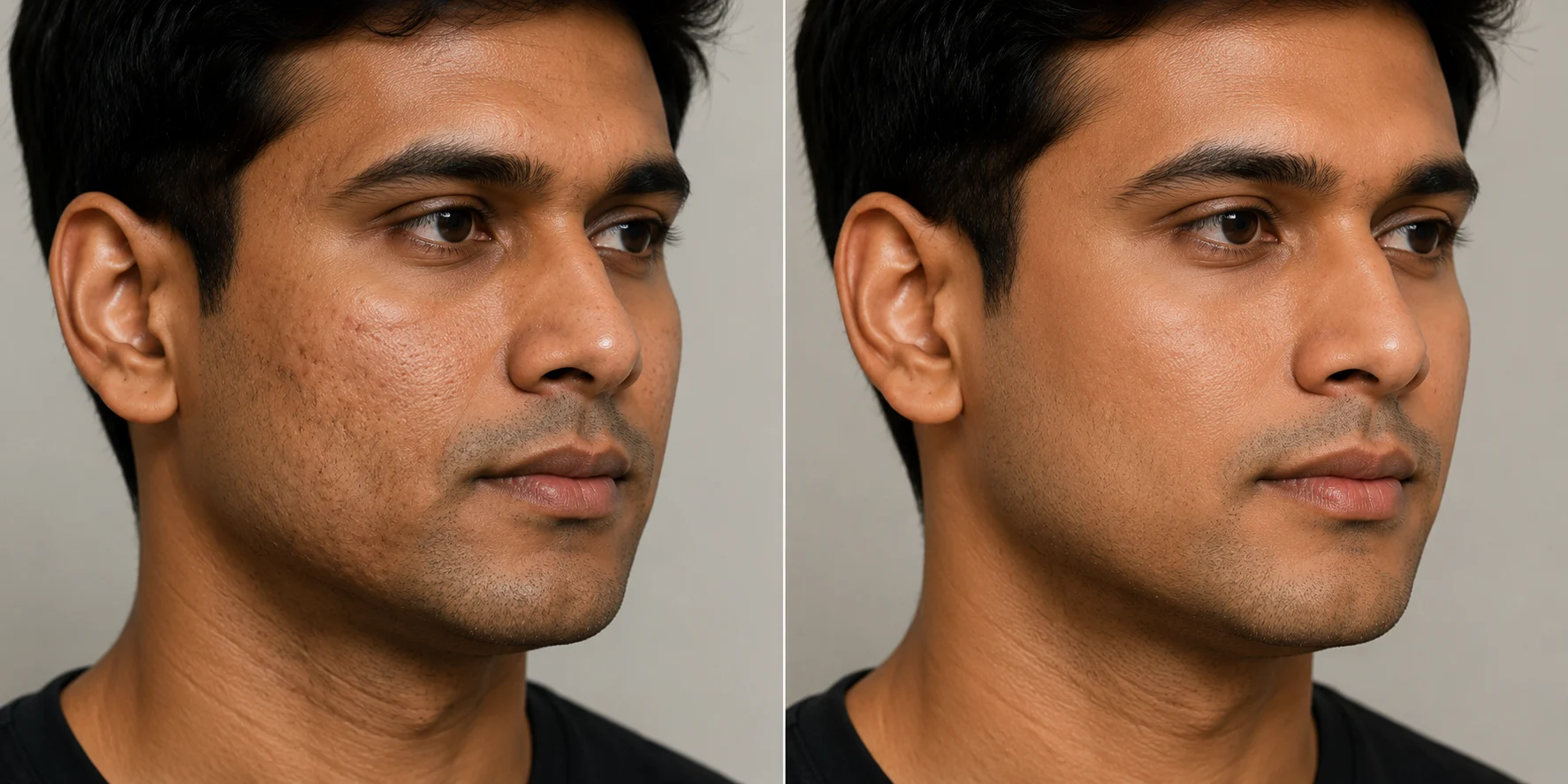
Laser Hair Reduction & Beard Reshaping
This is one of the fastest-growing categories in men's aesthetic medicine globally, and for reasons that are refreshingly practical rather than purely cosmetic.
Daily shaving is a genuine source of friction - literally. Repeated razor contact on coarse, curly hair (a common texture among Indian men) is one of the leading causes of ingrown hairs, folliculitis, and the dark, stubborn marks along the jawline and neck known as razor bumps or pseudofolliculitis barbae. Laser hair reduction addresses the problem at the follicle level, progressively reducing regrowth over a course of sessions rather than requiring daily maintenance - which is precisely why it has become popular for beardlines, necklines, and back/chest grooming among professional men who simply want one less daily task.
Beard reshaping has followed a parallel path. Rather than relying on guesswork with a trimmer, laser-assisted precision lets a man lock in a sharp, symmetrical beard line - cheek line, neckline, and jaw contour - that holds its shape between visits, addressing one of the most common (and most fixable) grooming complaints men raise: an uneven or patchy-looking beard edge that undermines an otherwise put-together appearance.
Laser Hair Reduction
Medical-grade, doctor-supervised laser hair reduction calibrated to different hair textures and skin tones - used for beardline definition, neckline cleanup, and reducing ingrown hairs and razor irritation across the face, chest, and back.
Explore Laser Hair Reduction →Braces, Whitening & the Smile Makeover Question
In any negotiation, client pitch, or first meeting, a smile is one of the fastest trust signals a face can send - which makes it one of the highest-leverage, most under-addressed aesthetic concerns for professional men.
Adult orthodontics has moved firmly into the mainstream. A significant share of the men who never had braces as children, or whose bite has shifted with age and wisdom-tooth movement, are now opting for clear aligners - a discreet, near-invisible way to correct crowding, gaps, and alignment issues without the visible metal-and-wire look that kept many men from considering orthodontics earlier in life. Because treatment now typically spans months rather than years, it fits far more comfortably into a working professional's schedule and self-image than it once did.
Teeth whitening remains the highest-return, lowest-effort option in this category - a single-session, clinically supervised treatment that reliably lifts years of coffee, tea, and tobacco staining before a major event, a conference, or simply as a standing maintenance habit. For men wanting a more comprehensive reset - correcting chips, uneven shape, gaps, and colour together - a coordinated Smile Makeover combines whitening with veneers or dental bonding, planned around facial proportions rather than a generic "ideal smile" template.
Smile Makeover
A customised, multi-treatment plan addressing tooth colour, alignment, shape, and overall smile harmony - designed around individual facial features rather than a one-size-fits-all standard.
Explore Smile Makeover →Braces & Clear Aligners
Discreet, personalised orthodontic correction for crowding, gaps, and bite issues - increasingly common among professional men addressing alignment for the first time as adults.
Explore Braces & Clear Aligners →Professional Teeth Whitening
A safe, clinically supervised in-clinic treatment that removes staining and restores natural brightness - the fastest, lowest-commitment upgrade in this entire guide.
Explore Teeth Whitening →Dental Veneers & Bonding
For chipped, uneven, or discoloured teeth, veneers and composite bonding offer precise, natural-looking correction - often used as targeted components within a broader smile makeover.
Explore Dental Veneers →
A Male Aesthetic Protocol by Career Stage
The men who get the most out of aesthetic treatment rarely approach it as a single fix for a single complaint. They think of it the way they think of preventive health checkups - a small, planned, recurring investment rather than a reactive scramble once a concern has become obvious. Here's a general framework for sequencing that investment through three career stages.
| Career Stage | Priority Concerns | Recommended Treatments | Goal |
|---|---|---|---|
| Early Career 28-35 |
Early hairline changes, persistent dandruff, teenage acne scarring, first fine lines from screen fatigue | Mesotherapy + preventive GFC/PRP (hair), Chemical Peels or Microneedling (scarring), low-dose preventive Botox, Teeth Whitening | Preserve what you already have; build a treatment baseline before change becomes dramatic or costly to reverse |
| Peak Executive 36-45 |
Visible hairline recession, jawline heaviness from stress-clenching, deepening expression lines, pigmentation, bite or alignment shift | GFC/PRP or Transplant (per Norwood stage), Masseter Botox, Brotox, Skin Boosters or Exosome Therapy, Clear Aligners | Active, calibrated correction - the goal is to look sharper and more rested, never visibly "different" |
| Senior Leadership 46-50+ |
Advanced hair thinning, facial volume loss, cumulative sun damage, textural change, years of smile wear | Hair Transplant + maintenance GFC, Dermal Fillers, Carbon Laser or resurfacing treatments, Smile Makeover, IV Drip vitality support | A coordinated, structural refresh - addressed as an integrated plan rather than isolated, one-off fixes |
Start With a Consultation, Not a Treatment
Nearly every man who walks in with one specific complaint - usually hair or a jawline concern - leaves with a more complete picture of two or three connected issues worth addressing together. A single consultation covering skin, hair, and dental concerns is almost always more efficient than three separate appointments spread across months.
Frequently Asked Questions
Is it normal for men to get Botox? Won't it look obvious?
It's now one of the fastest-growing categories in aesthetic medicine worldwide, with male usage having risen roughly fourfold over the past two decades. The "obvious" result most men fear almost always comes from incorrect technique or dosing calibrated for female anatomy - not from Botox itself. Male-specific treatment uses higher unit dosing (men's facial muscles are typically stronger) and keeps the brow flatter and less arched, producing a refreshed, rested look rather than a frozen or feminised one.
I'm losing hair - how do I know if I need PRP/GFC or a transplant?
It depends on your Norwood stage. As a general rule, Stage 1–3 hair loss responds best to regenerative therapy like GFC or PRP, since the follicles involved are miniaturising but still biologically active. Once bald patches are established - typically Stage 4 and beyond - those areas generally need a transplant, since regenerative therapy cannot regrow follicles that have gone permanently dormant. A proper scalp assessment, including a look at donor-area density, is the only reliable way to confirm your stage and the right approach.
Does masseter Botox affect my ability to chew or eat normally?
At correctly calibrated doses, no. The masseter is relaxed and gradually reduced in bulk, not fully immobilised - normal daily chewing continues throughout treatment. Doses are adjusted based on your specific muscle size and treatment goal (cosmetic slimming versus bruxism relief), which is why this treatment should always be planned individually rather than applied as a fixed, generic dose.
My dandruff won't go away no matter what shampoo I use. What's actually happening?
Persistent, itchy, or inflamed flaking that doesn't resolve with regular over-the-counter treatment is frequently seborrheic dermatitis rather than simple dry-scalp dandruff - a chronic inflammatory condition that needs targeted management. It's worth getting assessed properly, especially if you're also noticing increased shedding, since an inflamed scalp environment can meaningfully reduce how well hair regrowth treatments perform.
Is laser hair reduction permanent, and does it work on coarse or curly Indian hair textures?
Laser hair reduction significantly and progressively reduces regrowth over a course of sessions rather than delivering complete, permanent removal in one visit - most men see substantial, long-lasting reduction after a full course. It's effective across a range of hair textures and skin tones when the laser settings are properly calibrated to the individual, which is why doctor-supervised treatment matters more than the marketing claims of any single device.
I'm in my 40s and never had braces. Is it too late for clear aligners?
Not at all - adult orthodontics is increasingly common precisely among men in this age group, many of whom are correcting either a childhood issue they never addressed or new crowding caused by wisdom-tooth movement and natural bite shift over time. Clear aligners are typically discreet enough to wear through client meetings and video calls without anyone noticing, and treatment timelines are usually measured in months rather than years.
Will people be able to tell I've had something done?
That's the explicit goal of a well-planned male aesthetic protocol - they shouldn't be able to pinpoint what changed, only notice that you look more rested, sharper, and less depleted than before. Techniques, dosing, and treatment selection are all calibrated specifically to preserve masculine facial structure and expression, not to erase it.
Can I combine hair, skin, and dental consultations into a single visit?
Yes - this is exactly how Krity 360 is structured to work. Since skin, hair, and dental concerns are frequently connected (stress-driven jaw clenching affecting both jawline and dental wear is a common example), an integrated consultation is usually more efficient and gives a more complete treatment picture than addressing each concern separately over time.
Sharper, Not Different. A Conversation, Not a Commitment.
A consultation at Krity 360 gives you a clear, honest picture of what's actually changeable, what isn't worth touching, and a plan built around your schedule, not a sales quota.
From Krity 360
- 1. Grand View Research. India Cosmetics Market Size, Share & Growth Report, 2026–2033 - men's cosmetics category CAGR data.
- 2. Mordor Intelligence. India Aesthetic Devices Market Report, 2026–2031 - age-cohort distribution and category growth data.
- 3. IMARC Group; reported via Republic World, "India's Aesthetics Decade Starts Now" (2026) - India hair transplant market sizing and growth projections.
- 4. 5W Communications. "The 2026 Male Aesthetic Revolution" industry report, as reported in trade press (2026) - male cosmetic procedure growth trends.
- 5. American Society of Plastic Surgeons (ASPS) - annual male cosmetic procedure statistics, 2024–2025.
- 6. American Academy of Facial Plastic and Reconstructive Surgery (AAFPRS) - hair restoration demand trends, 2024–2025.
- 7. Journal of Clinical and Diagnostic Research. Study on Hair Fall with Hair-Related Problems Among Males Aged 18–50 (Chennai-based population study), 2018.
- 8. Population-based dandruff prevalence surveys across Indian cohorts, multiple sources, 2020–2025.
- 9. Norwood, O.T. Classification system for male pattern baldness - the standard hair-loss staging reference used in dermatology and hair restoration since the 1970s.
- 10. Multiple clinical sources on botulinum toxin dosing protocols for masseter hypertrophy, bruxism, and TMJ-related jaw tension, 2025–2026.
This blog is for informational purposes. It does not constitute medical advice. Please consult a qualified medical professional for diagnosis and treatment decisions.