How to Reduce Cheek Fat: What Works, What Doesn’t, and When Buccal Fat Removal Makes Sense
How to Reduce Cheek Fat: What Works, What Doesn’t, and When Buccal Fat Removal Makes Sense
Genetics, puffiness, jaw muscle or the buccal fat pad? An honest guide to what is behind your cheek fullness, and what is actually worth trying.
If you have ever searched “how to reduce cheek fat in 7 days”, you have probably found long lists of face exercises, diet tips and, somewhere near the end, a mention of surgery. What most of those pages skip are the questions people actually have. Why are my cheeks full in the first place? Will anything work if I am already slim? And if I choose a procedure, will I regret it at 40?
This guide answers those questions honestly, including when the right answer is not to operate at all, so you can decide what is worth trying.
File: how-to-reduce-cheek-fat-causes-bangalore-krity360.webp · 1200×675

The quick answer
- You cannot choose where your body loses fat. Gradual overall fat loss can slim the face, but if your fullness is genetic, you may see little change.
- Puffiness is not the same as fat. Salt, alcohol and poor sleep can make cheeks look fuller, and this is the easiest part to fix.
- Face exercises are unlikely to slim your cheeks. The best-known trial found they made cheeks look fuller.
- Buccal fat removal is permanent, so it needs careful candidate selection. Removing too much can make the face look hollow or older later in life.
- Not every full face is buccal fat. Jaw muscle, skin laxity and bone structure can look similar, and each needs a different solution.
- Sometimes the best surgical decision is not to operate. A good surgeon will tell you so.
Why do some people have full cheeks?
Cheeks can look full for several different reasons, and often more than one at a time:
Genetics and the buccal fat pad
Some people are born with larger buccal fat pads, the pads of fat in the lower cheeks, even when the rest of the body is slim.
Overall body fat
Facial roundness often goes up and down with body weight.
Water retention
A salty meal, alcohol or a short night’s sleep can leave the face puffy, especially in the morning.
Jaw muscle (masseter) bulk
A square, wide lower face may come from muscle, not fat.
Skin laxity and ageing
Early jowls can soften the jawline and make the lower face look heavier.
Bone structure
A broad cheek or jaw frame cannot be changed by removing fat.
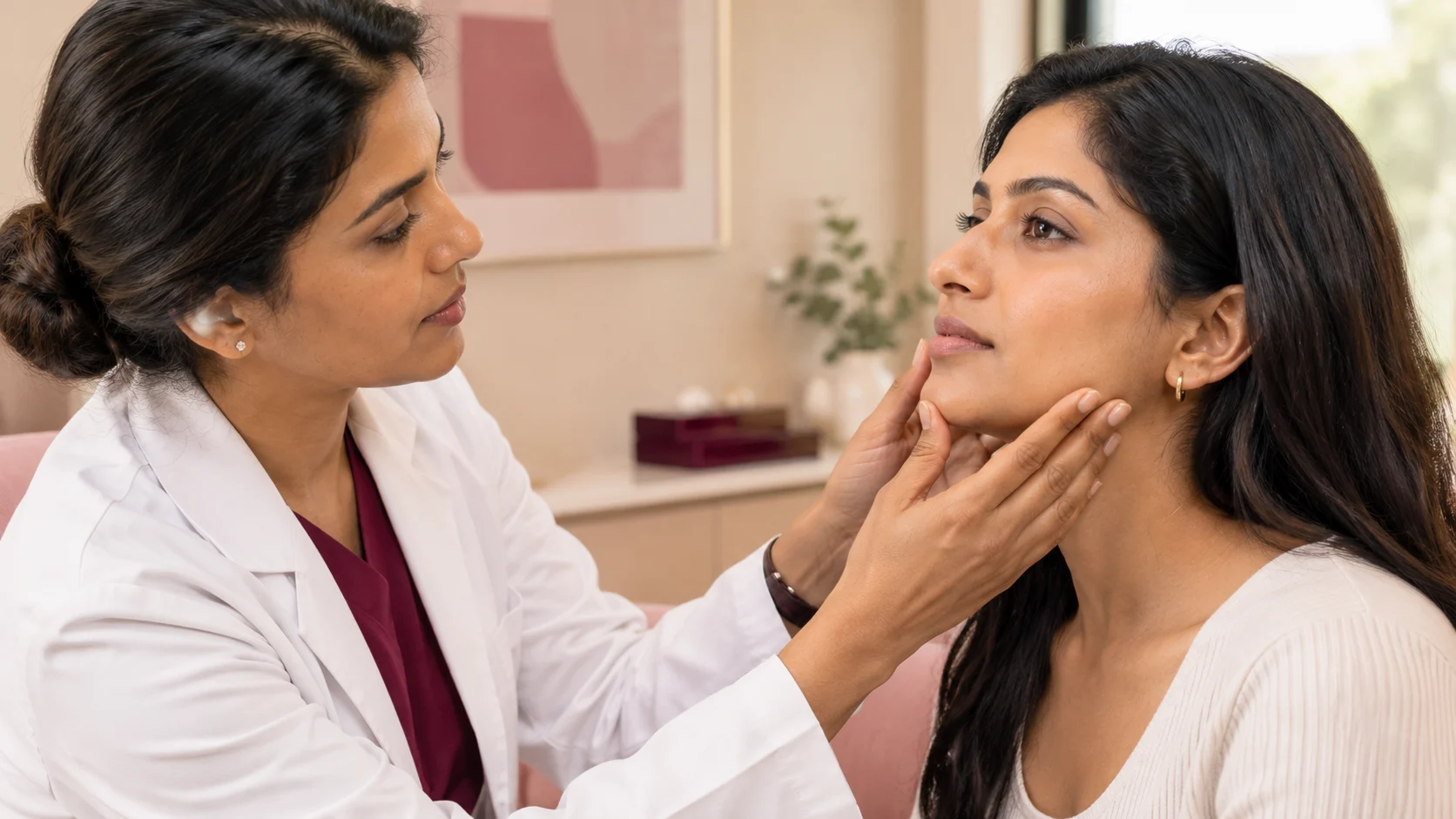
Working out which of these applies to you comes before choosing any treatment. A clinical assessment is the reliable way to do that.
What exactly is the buccal fat pad?
The buccal fat pad is a distinct collection of fat deep in the cheek, lying between the facial muscles. It is not the same as the fat just under the skin. Everyone has one, although its size varies a great deal from person to person. In babies it helps with sucking. In adults it adds volume to the middle and lower face and cushions the muscles around it.
This is why surgeons do not see it as simply “extra fat”. It is part of the natural architecture of the face, and removing it changes that architecture. The pad also lies close to important structures, including the salivary (parotid) duct and branches of the facial nerve, which is one reason this procedure belongs in the hands of an experienced surgeon.
File: buccal-fat-pad-anatomy-illustration-krity360.webp · 1200×675
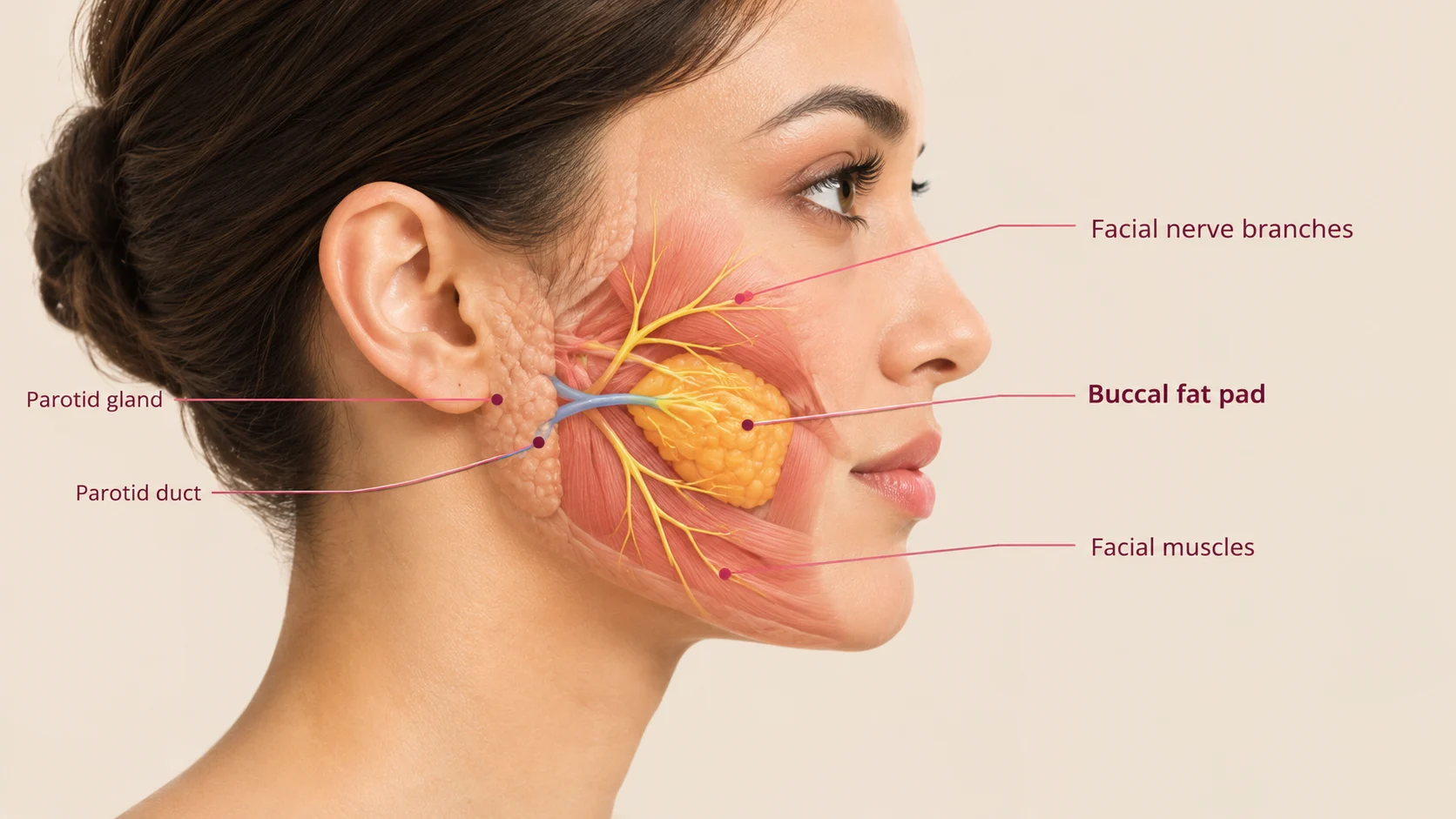
Visible cheek fullness does not always match the size of the pad, either. Two people with similarly round cheeks can have very different amounts of buccal fat, and the fullness may come from superficial fat, muscle, skin or bone. This is why a hands-on assessment matters more than a photograph or a description of “chubby cheeks”.
Buccal fat pad reduction, also called buccal fat removal or bichectomy, is the procedure that removes a portion of this pad.
What actually works at home
There is no shortcut, but these habits have real support:
Reduce overall body fat gradually
Regular cardio and strength training, with sensible eating, is the only non-surgical way to reduce facial fat. The face tends to change along with the rest of the body, and it takes weeks to months, not days.
Cut back on salt and processed food
Excess sodium makes the body hold water, which shows up in the face first.
Limit alcohol
It dehydrates and causes bloating.
Sleep well
Poor sleep affects appetite, stress hormones and morning puffiness.
Stay hydrated
This mostly helps with bloating and puffiness, not fat itself.
Be wary of any plan that promises a slimmer face in 7 days. Genuine fat loss does not work that way.
Do face exercises, face yoga, massage or chewing gum reduce cheek fat?
Probably not. Fat cannot be “spot reduced” from one area by working the muscles under it.
The most cited study is a small 2018 trial in JAMA Dermatology from Northwestern University. Women aged 40 to 65 did a programme of facial exercises for 20 weeks, and their cheeks looked fuller, probably because the cheek muscles grew. For someone who wants slimmer cheeks, that is the opposite of the goal.
Chewing gum can build up the jaw muscles, which in some people makes the lower face look wider. Facial massage and gua sha may reduce temporary puffiness, but they do not remove fat.
Non-surgical clinic options
What works in a clinic depends on the cause of your fullness:
Masseter Botox
Relaxes an enlarged jaw muscle. It helps when a square jaw, not cheek fat, is the cause. The effect lasts around 3 to 6 months.
Dermal Fillers
Add volume, so they do not slim the face. They can define the jawline or chin so the lower face looks more contoured.
Skin Boosters
Skin boosters and skin quality treatments improve hydration and firmness. They do not remove fat.
⚠️ Fat-dissolving injections (deoxycholic acid)
These need particular caution. In September 2026 the US FDA approved additional warnings for Kybella. It is approved only for fat under the chin. The FDA identified 129 reported adverse events when it was injected elsewhere, including facial muscle and nerve injury, and it recommends against that use. It also cautioned against unapproved “fat-dissolving” products.
If anyone suggests this for your cheeks, ask which product it is and what evidence supports it.
What buccal fat removal involves
In buccal fat removal, a surgeon makes a small incision inside the cheek and removes a measured portion of the buccal fat pad on each side.
The final contour can take longer to settle as swelling goes down and the face adjusts. Results are not immediate: swelling can make the cheeks look unchanged, or even fuller, at first.
It helps to be clear about what the procedure can and cannot do.
✅ What it can do
- Reduce fullness in the lower cheeks
- Create a more defined transition between the cheeks and the jawline
- Make existing cheekbone definition more noticeable in some people
🚫 What it cannot do
- Shrink the jaw muscles, remove jowls or tighten loose skin
- Enlarge or reposition the cheekbones
- Guarantee sharply defined cheekbones or a sculpted jawline
- Stop the face from ageing
For the full details on suitability, risks, recovery and cost factors, see our page on Buccal Fat Removal for a Slimmer, More Contoured Face.
What most articles skip: ageing and regret
This is the part to think about most carefully.
- The fat never grows back. If you later feel the result is too hollow, it cannot be undone. Fat grafting or fillers may help partly, but they may not restore your original contour.
- Your face loses fat as you age anyway. Surgeons writing for the American Society of Plastic Surgeons explain that what remains of the buccal fat pad shrinks over time. Removing a large portion can therefore make the cheeks look sunken in later decades.
- Social media has fuelled demand. In 2023 the British Association of Aesthetic Plastic Surgeons (BAPRAS) reported a sharp rise in searches, at least thirty-fold in six months, and urged caution. It warned of possible nerve and gland damage and of a gaunt look as the face ages.
- Copying a celebrity’s face is the wrong goal. The aim should never be to remove the maximum amount of fat or to reproduce someone else’s cheekbones. A good result looks balanced and right for your own face, not like a passing trend.
- Asymmetry is possible. Buccal fat pads are not always the same size on both sides, so careful, conservative removal matters.
- Slim faces are poor candidates. Surgeons generally do not recommend it for people with naturally narrow or thin cheeks.
File: buccal-fat-removal-ageing-volume-loss-krity360.webp · 1200×675
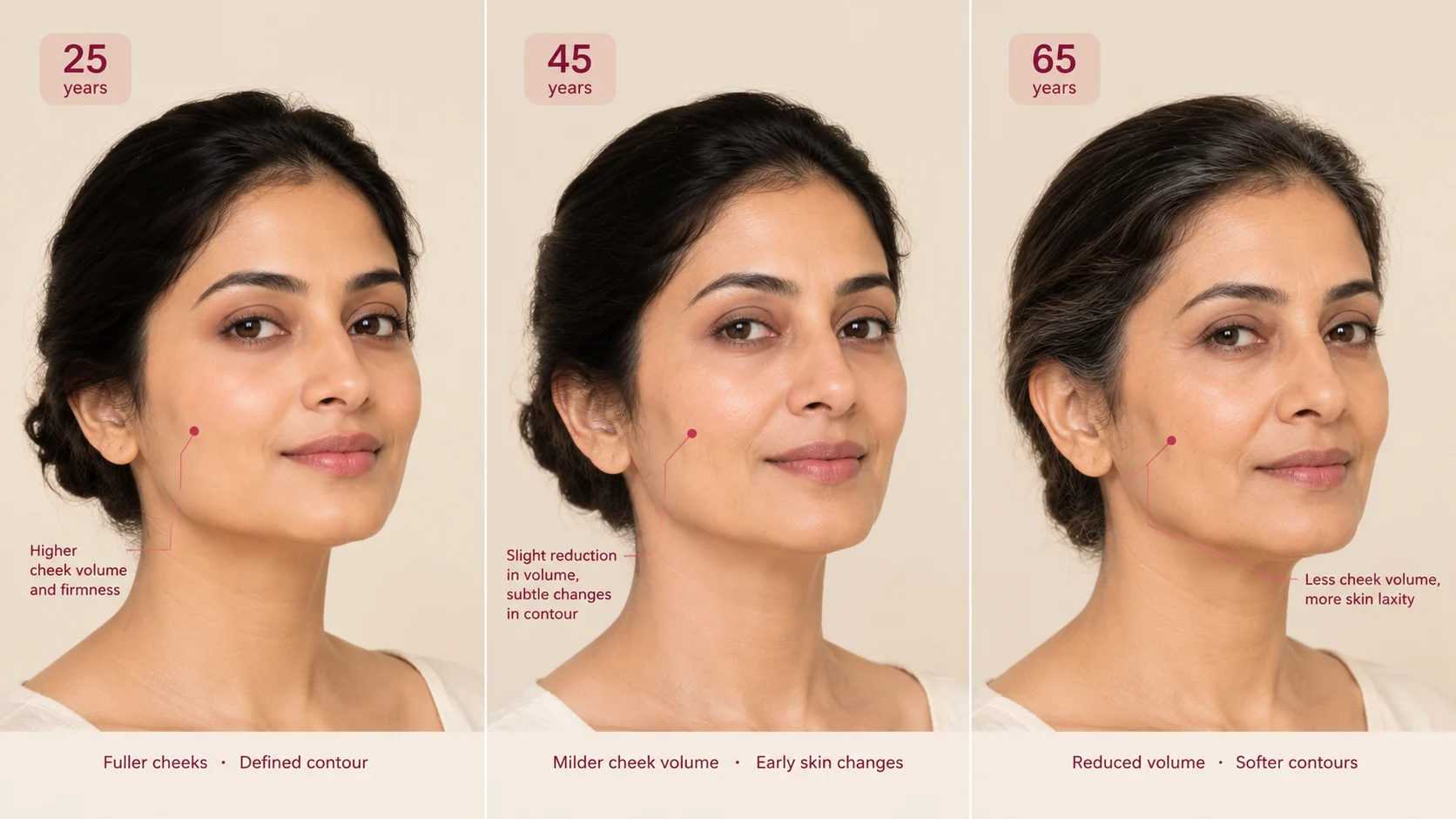
That said, it would be wrong to claim that everyone who has this surgery will age prematurely. How much it affects future ageing cannot be predicted precisely, and long-term evidence is limited. It would be equally wrong to dismiss the risk of a hollow look later in life. Our surgeon’s principle is simple: preserve what the face may need in the future.
Preserve what the face may need in the future.
The people who tend to do best are adults with persistently full lower cheeks despite a stable weight, good skin elasticity and realistic expectations, who have been assessed by an experienced surgeon.
In some cases, the most responsible advice a surgeon can give is not to operate. At Krity 360, our approach to facial aesthetics focuses on enhancing natural features while preserving facial harmony and long-term balance.
What does buccal fat removal cost in India?
Published estimates vary widely. Some online listings quote tens of thousands of rupees, while other clinics quote ₹1,50,000 or more. The cost depends on:
The surgeon’s experience and the extent of correction
The clinic or hospital setup and the anaesthesia used
Medicines and follow-up visits
Whether it is combined with other procedures
It is a cosmetic procedure, so health insurance does not usually cover it. If a quote looks very low, ask who will operate, where, what is included, and how complications are handled. At Krity 360, the consulting surgeon will be able to provide you the estimate after a proper consultation and assessment.
Which option may suit you?
| If your cheeks look full because of… | You might consider… |
|---|---|
| Overall weight or puffiness | Gradual weight management, less salt and alcohol, better sleep |
| Genetically full lower cheeks despite a slim body and stable weight | An assessment for buccal fat removal |
| Jaw muscle bulk | Masseter Botox |
| A soft jawline or early sagging | Skin tightening or contouring, which may include fillers |
| A broad lower face caused by bone structure | An assessment of facial proportions and the underlying bone; removing fat will not change this |
| An already slim face, naturally flat or hollow cheeks, or early volume loss | Caution: talk to your doctor before any fat removal. The question may be how to preserve volume, or in selected cases restore it |
These options are not interchangeable, and some people will not benefit from any treatment. The right choice depends on the anatomy underneath, not on how you describe your face.
If your concern is mostly skin texture or early ageing, our Skin Treatments Guide can help you narrow down options.
Questions to ask at a consultation
File: buccal-fat-removal-consultation-assessment-bangalore.webp · 1200×675
- Is my fullness really buccal fat, or is it muscle, skin or bone?
- How much fat do you plan to remove, and why that amount?
- How will my face look in 10 and 20 years?
- What are the risks for me in particular?
- Is there any reason you would advise me not to have this done?
- Who performs the procedure, and in what setting?
- What is included in the cost?
- What happens if I am unhappy with the result?
- Is there a non-surgical option I should try first?
Frequently asked questions
1. Can I reduce cheek fat in 7 days?
No method removes real fat in a week. You may reduce puffiness quickly by cutting back on salt and alcohol and sleeping well, but changes in fat take weeks to months.
2. Will losing weight reduce my buccal fat?
It can slim the face overall. In some people the buccal fat pads stay prominent even after weight loss, particularly if they are genetically large.
3. Do face exercises reduce cheek fat?
There is no good evidence that they do. The main study found cheeks looked fuller after exercise.
4. Is buccal fat removal permanent?
The fat that is removed does not grow back. Weight changes and ageing can still change how your face looks.
5. Will buccal fat removal make me look older?
It can, if too much is removed or if you are not a suitable candidate, because the face naturally loses volume with age. How much it affects future ageing cannot be predicted precisely, which is why conservative removal and careful selection matter.
6. Is buccal fat removal suitable for everyone with a round face?
No. Facial fullness can come from several structures, including the buccal fat pad, jaw muscle, superficial fat, skin and bone. A clinical examination is needed to find out whether the buccal fat pad is actually contributing.
7. Will buccal fat removal give me cheekbones?
It may make existing cheekbone definition more noticeable in some people, but it does not enlarge or reposition the cheekbones. The result depends on your underlying facial anatomy.
8. How much does buccal fat removal cost in Bangalore?
Costs vary by surgeon, setup and extent. At Krity 360, the consulting surgeon provides an accurate estimate after a proper consultation and assessment.
9. How long is the recovery?
Most people resume routine activities within a few days, and full recovery takes about three weeks. Swelling can make the cheeks look unchanged or even fuller at first, and final results can take a few months to appear.
10. Can buccal fat removal be reversed?
Not directly. Fat grafting or fillers may restore some volume, but may not fully recreate your original contour.
11. Are fat-dissolving injections safe for the cheeks?
The FDA recommends against using deoxycholic acid (Kybella) outside the area under the chin because of reports of serious adverse events. Discuss this carefully with a qualified doctor.
The bottom line
For most people, the best first steps are the unglamorous ones: steady overall weight management, less salt and alcohol, and good sleep. If your cheeks are full because of genetics, a medically guided option may be worth discussing, but only after an assessment that rules out muscle, skin and bone as the cause. Buccal fat removal can give a long-lasting result for the right person, and it is permanent, so it deserves careful thought.
The goal is facial definition without compromising your natural volume, harmony or future appearance.
Curious what is behind your cheek fullness?
If you would like an honest opinion, book a consultation at Krity 360, conveniently located near Sarjapur Road, Bangalore. Responsible facial aesthetics begins with a thorough consultation, an honest discussion of benefits and limitations, and a treatment plan tailored to you.
Book a Consultation Explore Buccal Fat RemovalKrity 360 - Enhancing facial harmony through informed, personalised aesthetic care.
Krity 360 | 34/5, Aadeshwar Chambers, Kasavanahalli Main Road, 1st Cross Road, Bengaluru 560035 | +91 93807 89495
References
- 1. American Society of Plastic Surgeons, Facial fat is precious: why your plastic surgeon shouldn’t be too aggressive with buccal fat removal
- 2. British Association of Aesthetic, Plastic and Reconstructive Surgeons, Stay well padded: surgeons urge caution on cheek fat removal craze (June 2023)
- 3. Johns Hopkins Medicine, Buccal fat removal
- 4. Harvard Health Publishing, Buccal fat removal: what to know about cheek reduction surgery and nonsurgical ways to lose facial fat
- 5. US FDA, Drug Safety Communication: Kybella (deoxycholic acid) labeling update (September 2026)
- 6. Alam M, et al. Association of facial exercise with the appearance of aging. JAMA Dermatology, 2018
This article is for general educational purposes and does not replace an individual clinical consultation. Suitability, surgical technique, risks, recovery and results vary from person to person and must be assessed by the treating surgeon.