Hair Spa vs Hair Restoration: Why Beautiful Hair Begins Beneath the Surface
💆 Hair & Scalp Health · Evidence-Based Guide
Hair Spa vs Hair Restoration: Why Beautiful Hair Begins Beneath the Surface
You have spent years (and a fair amount of money) on shine, smoothness and the Friday-evening salon ritual. This is a guide to the question underneath it all: what is your scalp actually doing?
Picture a familiar Friday. A client presentation on Monday, a cousin's wedding on Saturday, and a hair spa at six in the evening. By nine, your hair gleams. By Monday morning, the drain tells a different story, and the parting in the mirror looks a little wider than it did last year.
Nothing was wrong with the spa. The problem is the question we ask of it. A spa answers "how does my hair look today?" Hair restoration answers "why is my hair changing at all?" Most of us keep paying for the first answer while quietly worrying about the second.
This guide breaks down hair spa vs hair restoration, the difference between cosmetic hair care and evidence-based hair restoration treatment in Bangalore and elsewhere: what each can honestly do, why intelligent, busy people so often default to the quick fix, and why the sensible order is diagnosis first, indulgence second. Healthy hair looks even better after a spa. It does not work the other way round.
What a hair spa really does (and does well)
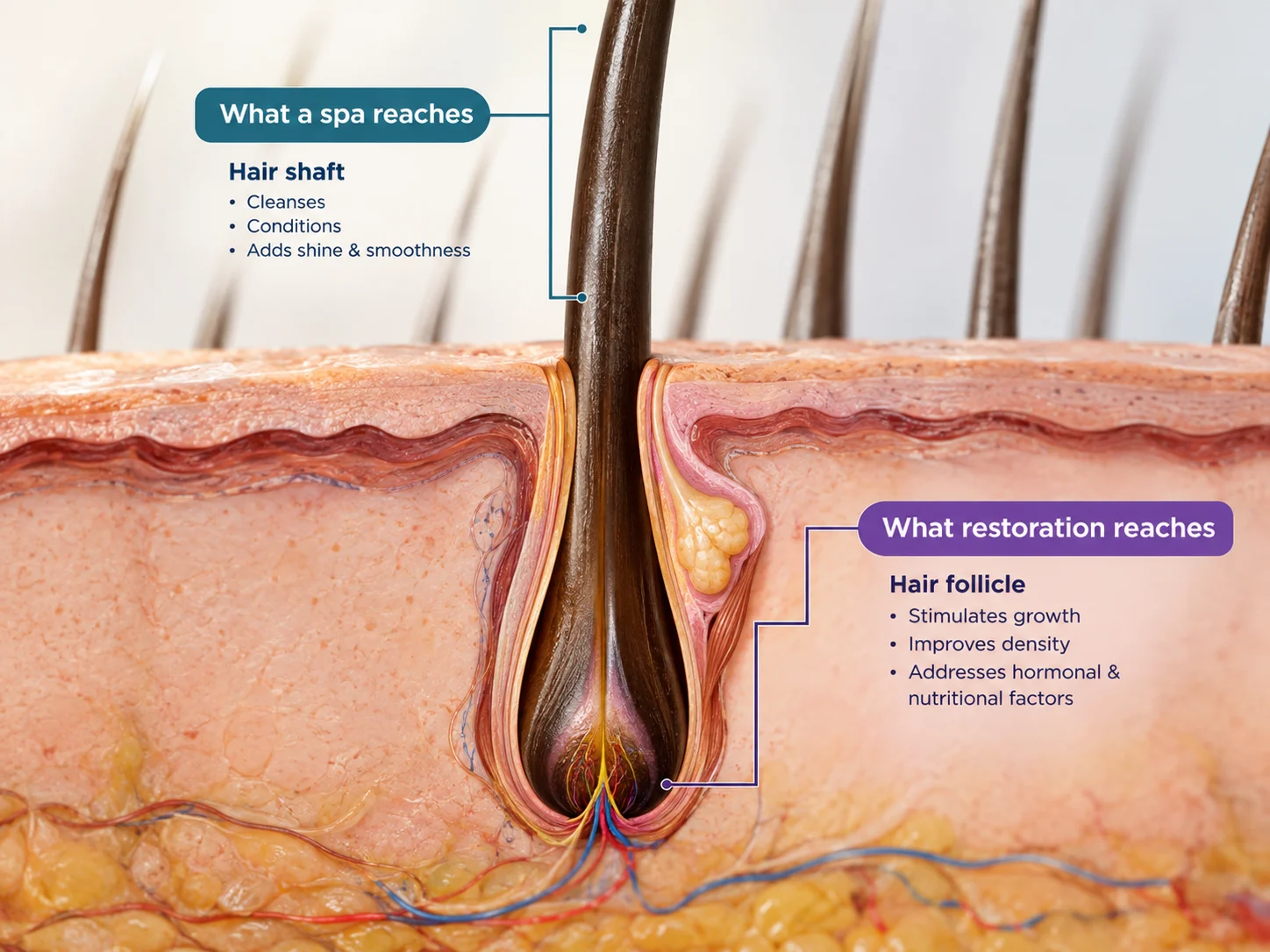
Let us be fair to the spa. A good one cleanses the scalp, softens the hair, adds shine and feels wonderful. Deep conditioning and smoothing treatments change how the hair shaft looks and handles, and that is a real, pleasant benefit.
But the shaft you see is essentially non-living keratin. Density, thickness and growth are decided lower down, in the follicle, a living organ under the skin that responds to hormones, nutrients, inflammation and genetics. A treatment that works on the shaft cannot change what the follicle is doing.
Why smart people choose the quick fix
If you recognise yourself here, you are in good company. Surveys of adults with scalp and hair concerns consistently find the same pattern: most agree these problems deserve treatment, yet many hesitate because they doubt it will work or worry about the cost, and lean instead on shampoos, tonics and salon services. Consumer review pages and hair communities echo it. These are the reasons that come up again and again.
"I need it by Saturday"
Events create deadlines. Biology does not follow them. A spa delivers visible change in two hours; a follicle needs a few months.
"I don't have the time"
A lunch-break salon slot feels manageable. A diagnostic process sounds like a project. In practice it starts with one consultation.
"Injections? No, thank you"
Needles, blood draws and the word "procedure" put many people off. Understandable, but it is worth knowing what is actually involved before deciding.
"What will this cost in total?"
A spa bill is small and familiar. A treatment plan looks large because the whole cost is visible at once. The spa total simply arrives in instalments.
"It's probably stress or the weather"
Sometimes it is. Shedding after illness, childbirth or crash dieting often settles by itself. But a widening parting or slowly thinning ponytail over many months is rarely just stress.
"I tried it once and nothing happened"
Results depend on the right diagnosis, protocol and patience. A single session, or a treatment for the wrong cause, tells you very little.
One more reason deserves mention: salon menus often bundle "hair fall treatment" with conditioning products. That is not dishonest, but it blurs a line. Conditioning improves how hair looks. Treating hair fall means finding its cause.
When the quick fix becomes a cycle
The real cost of the quick-fix habit is not any single appointment. It is the loop it creates.
Two things go wrong inside that loop.
1. Repeated heat and chemical processing wears the hair down
A keratin smoothing effect typically lasts about two to five months, and it works on hair that already exists, not on the follicle. The smoothing comes from chemistry plus high-heat flat ironing. An expert panel (the Cosmetic Ingredient Review) concluded that formaldehyde and methylene glycol were unsafe at the levels used in smoothing products, and the US FDA has signalled its intent to propose a ban on formaldehyde in these products. A review of chemical straighteners in Anais Brasileiros de Dermatologia links them with scalp inflammation, shaft damage and hair loss. Dermatologists note that in rare, severe cases, years of cumulative chemical processing can cause irreversible loss.
2. The glow delays the diagnosis
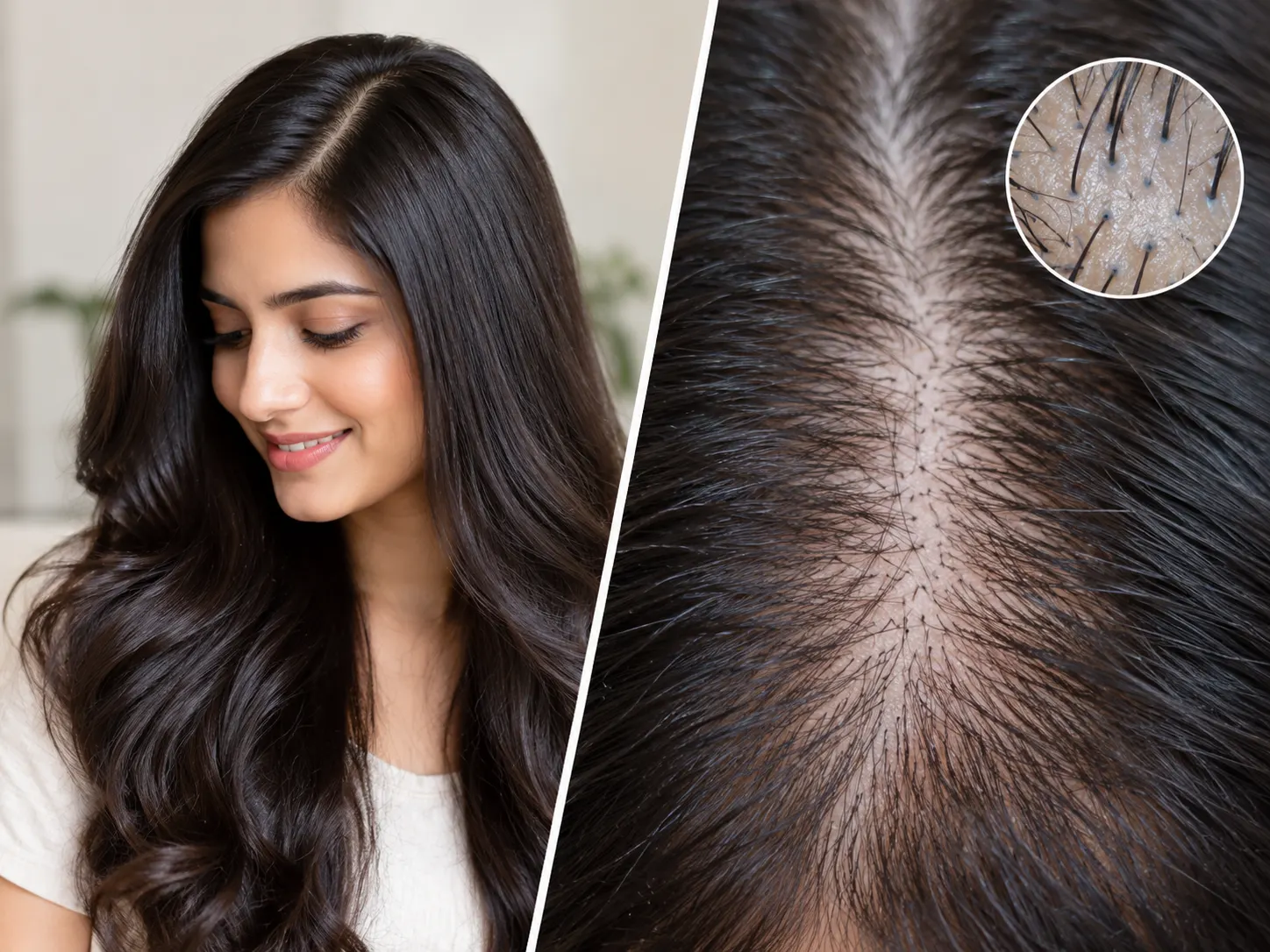
This is the more costly problem. Pattern hair loss is progressive. Every year spent polishing the surface is a year in which follicles may continue to shrink. Some conditions, such as scarring alopecias, can destroy follicles permanently, and people often notice them only after significant loss.
The real cost: three years on the treadmill
Here is an illustrative comparison for a working professional in a metro city. These are typical ranges, not quotes.
| Path | What it includes (3 years) | Approx. spend |
|---|---|---|
| Quick-fix cycle | Monthly hair spa at ₹1,500-3,000 | ₹54,000-1,08,000 |
| Smoothing three times a year at ₹3,000-8,000 | ₹27,000-72,000 | |
| Serums, tonics, supplements at ₹1,000-2,500 a month | ₹36,000-90,000 | |
| Diagnosis-led plan | Consultation, scalp analysis and relevant blood tests | ₹4,000-10,000 |
| Active course of PRP or GFC sessions (5-7) | ₹30,000-84,000 | |
| Mesotherapy course, only if indicated | ₹0-48,000 | |
| Maintenance sessions in years two and three | ₹16,000-48,000 | |
| Medical management of the underlying cause | ₹18,000-54,000 | |
| Quick-fix cycle total: about ₹1.2-2.7 lakh. Diagnosis-led total: about ₹0.7-2.4 lakh. | Ranges overlap | |
Illustrative only. Actual costs vary by clinic, hair length, frequency and the plan your clinician recommends.
The ranges overlap, and that is the honest point. Rupee for rupee, the two paths cost similar amounts. The difference is what you are left with. The cycle never ends and leaves the cause untouched, so the bill keeps arriving in year four, five and six. The diagnosis-led plan is front-loaded and tapers into maintenance. And if the loss progresses meanwhile, you often end up paying twice: once for years of surface care, then again for a bigger restoration job on a thinner scalp. Add the hours too. A monthly spa plus a few smoothing sessions can easily take thirty or more hours a year.
What evidence-based hair restoration actually involves
- History and scalp analysis. Your clinician asks about shedding, family history, diet, illness, stress and hair practices, then examines the scalp.
- Blood investigations, when indicated. Not a blanket panel, but tests chosen by your pattern of loss.
- A diagnosis-matched plan. Medical management of the cause, with regenerative therapies where they make sense.
- Measure and maintain. Progress is tracked against your baseline, and the plan is adjusted.
Scalp analysis for hair loss: seeing what the mirror cannot
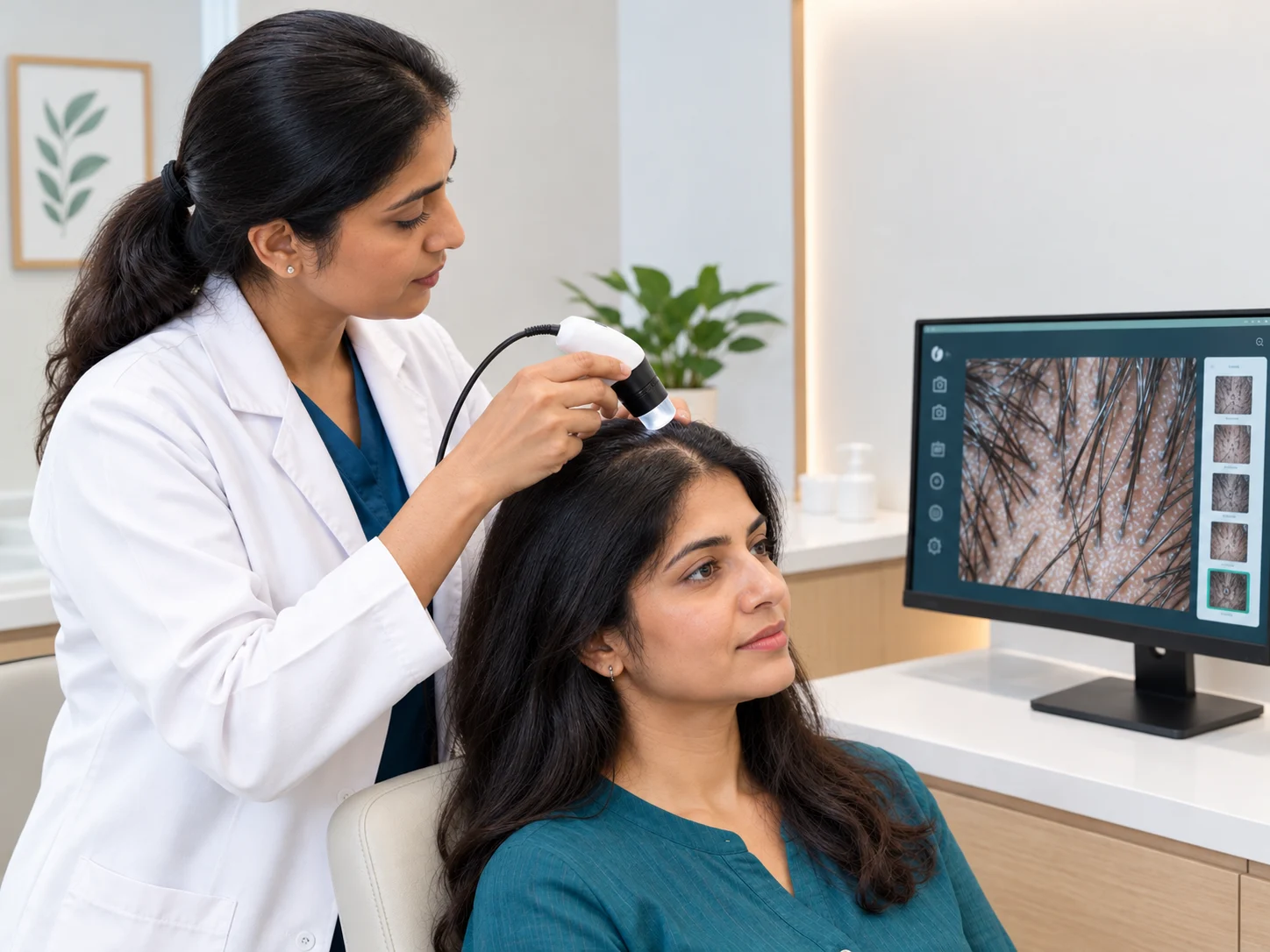
Trichoscopy is a painless, magnified examination of the scalp and hair shafts. It shows variation in hair thickness, fine "vellus" hairs, inflammation around follicles and early signs of scarring. In a systematic review of pattern hair loss, hair-diameter variability appeared in about 94% of patients, and for women the authors recommend supplementing clinical history with trichoscopy. It often avoids the need for a biopsy, and it gives you a baseline to measure progress against.
Blood investigations: only when they answer a question
| Test | Why it can matter | Typically considered when |
|---|---|---|
| Ferritin, iron studies, CBC | Low iron stores can drive diffuse shedding, even when haemoglobin looks normal | Diffuse shedding, heavy periods, vegetarian diet, fatigue |
| TSH and free T4 | Thyroid imbalance affects the growth cycle | Diffuse thinning, dry hair, cycle or weight changes |
| Vitamin D and B12 | Deficiency is common and correctable | Persistent shedding, low energy |
| Hormone panel | Androgen and metabolic factors drive pattern loss | Irregular periods, acne, facial hair, male-pattern thinning |
For a deeper look at the iron, PCOS and thyroid connection, read our guide to female hair loss in India.
PRP, GFC, mesotherapy and exosomes: what each is, and what the evidence says
| Approach | What it does | Evidence in brief |
|---|---|---|
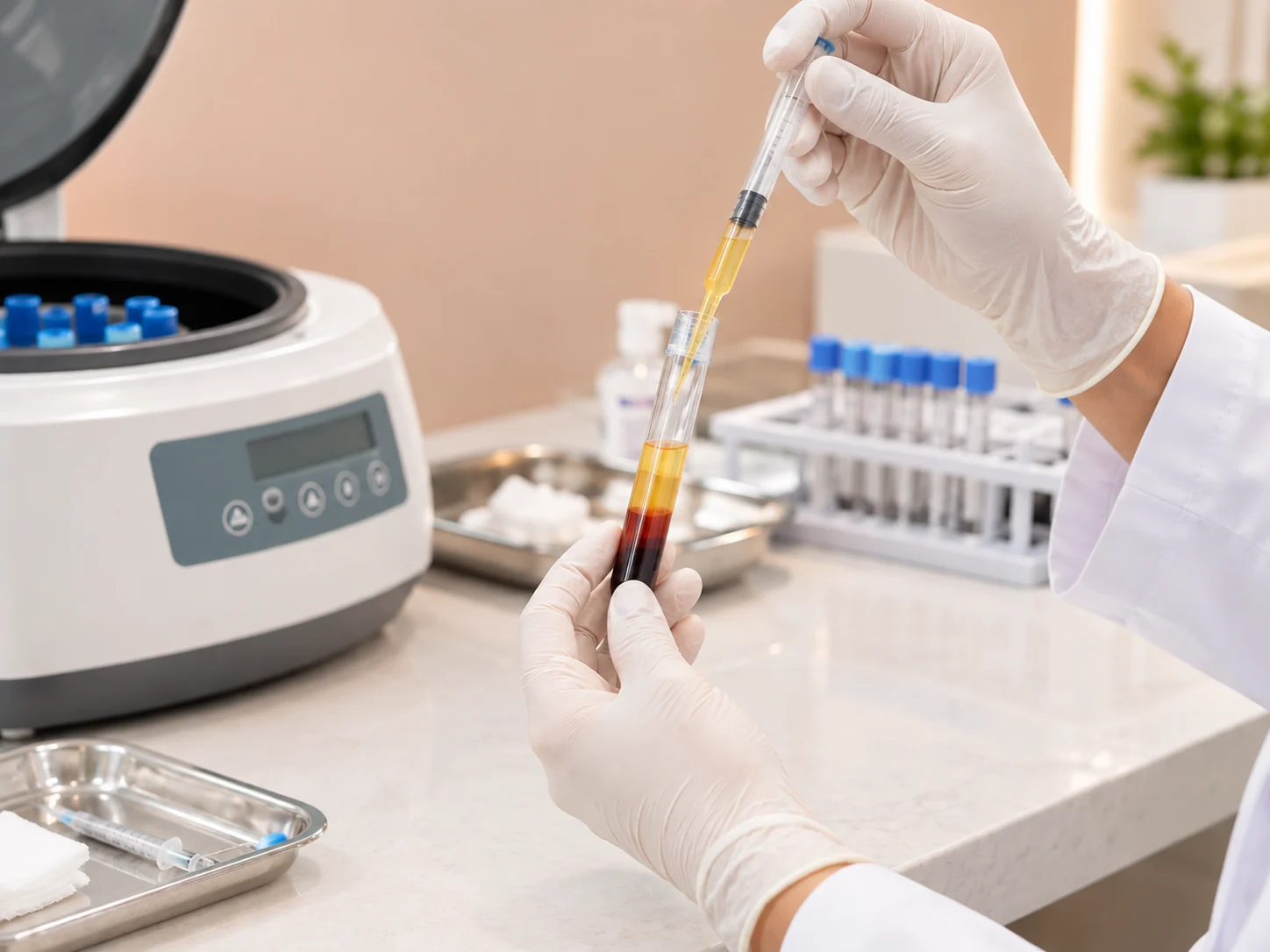
| PRP | Platelet-rich plasma from your own blood is injected into the scalp, where its growth factors help wake up and strengthen weakened follicles | One of the most extensively studied regenerative options for hair. A 2025 analysis of 43 randomised trials (1,877 participants) found moderate-quality evidence that PRP increases hair density, reduces hair loss and improves patient-rated results. Improvement is usually assessed at 3 to 6 months, and pooled trials show PRP added to minoxidil outperforming minoxidil alone. Best suited to early to moderate thinning, with periodic maintenance to sustain results. |
| GFC | A refined concentrate of the growth factors in your own platelets, prepared to deliver a higher concentration of follicle-stimulating signals than standard PRP | A 2026 meta-analysis of growth factor injections (12 studies, 745 patients) reported hair-density gains that build steadily over time: roughly 20 more hairs/cm² at one month, rising to around 57 by twelve months, along with thicker hair shafts and patient satisfaction above 90%. A course is typically 5 to 7 sessions - about three weeks apart, and GFC is often chosen for moderate thinning. |
| Exosomes | Lab-derived vesicles rich in growth factors and signalling molecules that help calm scalp inflammation and re-energise weakened follicles | The newest frontier in hair fall treatment. Many patients notice reduced shedding within 3-6 weeks, with density and thickness building over 3-4 months. Often chosen for early to moderate thinning, inflamed scalps, or when PRP or GFC alone has not delivered enough. Results vary with age, genetics and the underlying cause. |
| Mesotherapy | Micro-injections of vitamins, amino acids, peptides or medication, chosen for your scalp and delivered right where the follicles sit | Delivers actives locally, where follicles need them. Published studies, including a 2025 meta-analysis of intralesional dutasteride and recent randomised trials, report improvements in hair density and thickness, with results depending on the formulation used. It earns its place as a supporting layer, nourishing the scalp between PRP or GFC sessions and alongside medical therapy, tailored to the cause of your hair loss. |
The evolving role of exosomes: a new frontier in hair fall treatment
If PRP and GFC use the growth signals in your own blood, exosomes take regenerative medicine a step further. These tiny cell-derived vesicles carry growth factors, peptides and signalling molecules that act as messengers to the cells around the follicle. Because they are lab-processed, they deliver a very high concentration of signals along with a pronounced anti-inflammatory effect, which makes them especially interesting for early to moderate thinning, sensitive or inflamed scalps, and for people who have not responded as well as hoped to PRP or GFC.
The experience is refreshingly simple: precise micro-injections into the scalp after numbing cream, a session of about 45 to 60 minutes, and only mild redness for a day or two. A typical course is three to four sessions, four to six weeks apart, followed by occasional maintenance. As with every regenerative treatment, the quality of the formulation, a sterile medical setting and a plan built around your own scalp analysis are what shape the outcome. For a closer comparison, see GFC vs Exosomes vs PDRN.
The right order: restore first, then indulge
None of this means giving up your spa. It means putting it in its proper place. Once the cause is identified and the scalp is stable, a spa becomes what it was always meant to be: a finishing touch on healthy hair. Be realistic about timing, too. The hair cycle is slow, shedding can briefly increase early in treatment, and visible change is usually judged over months, not weeks. Your clinician will also advise how to time heat, colour and smoothing around your treatment.
Reasons to see a specialist sooner
Shedding that has lasted more than three months, a widening parting, receding temples, a visibly thinner ponytail, a sore, itchy or scaly scalp, patchy loss, or hair that has not recovered six months after illness or childbirth. If none of these apply, enjoy the spa guilt-free.
Frequently asked questions
Is a hair spa bad for my hair?
No. A gentle spa is generally harmless and can leave hair softer and shinier. The concern is repeated heat and chemical smoothing, and relying on cosmetic care to manage a medical problem.
Does a hair spa for hair fall actually work?
A spa can reduce breakage and improve the look of hair, but it does not treat the causes of shedding such as iron deficiency, thyroid imbalance or pattern hair loss.
Do I need blood tests for hair fall?
Not always. They are useful when your history or pattern of loss suggests a cause such as low iron, thyroid imbalance or hormonal factors. Your clinician decides which tests are worth doing.
What is the difference between PRP and GFC?
Both use your own blood. They differ in how the sample is processed and what it contains. Not all preparations are identical, so ask your clinician which system is used and why it suits your case.
Is exosome hair treatment a good option for hair fall?
Exosome therapy is the new frontier in hair fall treatment. It is often considered for early to moderate thinning, inflamed scalps, and cases that have not responded fully to PRP or GFC. Suitability depends on your scalp analysis, so a consultation comes first.
How long before I see results from hair restoration treatment?
Hair grows in cycles, so changes are usually assessed over three to six months or longer, and maintenance is often part of the plan. Results vary with the cause and the individual.
Curious what your scalp is really saying?
A consultation at Krity 360 begins with a proper scalp analysis and a conversation, not a treatment sold before your biology is understood.
Book a hair consultationExplore hair treatments
Krity 360 | 34/5, Aadeshwar Chambers, Kasavanahalli Main Road, 1st Cross Road, Bengaluru 560035 | +91 93807 89495
Sources
- 1. Cosmetic Ingredient Review Expert Panel, conclusion on formaldehyde and methylene glycol in hair smoothing products (2011).
- 2. Chemical hair straighteners and their effects on hair shaft and scalp, a review in Anais Brasileiros de Dermatologia (SciELO).
- 3. Platelet-rich plasma in the management of alopecia: a systematic review and meta-analysis of clinical evidence. 2025;15(11):3213–3252 (PMID 40944844).
- 4. Meta-analysis of efficacy of platelet-rich plasma combined with minoxidil for androgenetic alopecia (PMID 38789807).
- 5. Is autologous PRP capable of increasing hair density in androgenetic alopecia? Systematic review and meta-analysis. An Bras Dermatol, 2024.
- 6. The efficacy of growth factor injection in androgenic alopecia: a systematic review and meta-analysis. Aesthetic Plastic Surgery, 2026 (doi 10.1007/s00266-026-05910-3).
- 7. Effectiveness and safety of intralesional dutasteride in patients with androgenic alopecia: a systematic review and meta-analysis, 2025 (PMC12690437).
- 8. Baltazar Sanabria et al. Monthly versus quarterly dutasteride mesotherapy for male androgenetic alopecia: a randomized trial. J Eur Acad Dermatol Venereol, 2025 (doi 10.1111/jdv.70237).
- 9. Trichoscopy of androgenetic alopecia: a systematic review. J Clin Med, 2024.
- 10. Xu et al. The roles of exosomes in regulating hair follicle growth. Clin Cosmet Investig Dermatol, 2024;17:1603–1612.
- 11. Kim et al. Effects of exosomes from adipose-derived stem cells on hair loss: a retrospective analysis of 39 patients. J Cosmet Dermatol, 2022.
- 12. Survey of awareness, knowledge, treatment and behaviour of scalp and hair loss disorders in adults (Korean adult survey).
This article is for information only and is not medical advice. Please consult a qualified medical professional for diagnosis and treatment decisions.
More From Krity 360