GFC vs Exosomes vs PDRN
GFC vs Exosomes vs PDRN
What's science, what's hype, and what does "regenerative aesthetics" really mean - a clear-headed guide for anyone trying to separate genuine biology from clever marketing.
Regenerative aesthetics is changing the way we think about skin and hair. Instead of focusing only on adding volume, relaxing wrinkles or correcting visible imperfections, modern aesthetic medicine is increasingly interested in the biology of tissue repair, cellular communication and regeneration.
Three treatments that frequently appear in this conversation are GFC (Growth Factor Concentrate), exosomes and PDRN (polydeoxyribonucleotide). They are often grouped together under the broad label of "regenerative treatments." But biologically, they are quite different.
Understanding those differences is important - not only for clinicians, but also for patients trying to navigate an increasingly crowded aesthetic marketplace.
From Correction to Communication
Traditional aesthetic medicine has often focused on correction.
Regenerative aesthetics asks a slightly different question:
Can we influence the biological environment that helps tissue repair and remodel itself?
This is where GFC, exosomes and PDRN become interesting. A simple way to remember them:
They overlap in their goals, but their biological concepts are different.
GFC: Harnessing the Patient's Own Signals
GFC, or Growth Factor Concentrate, is based on the idea of using signalling molecules obtained from the patient's own blood.
Growth factors participate in numerous biological processes, including:
- Cellular proliferation
- Angiogenesis
- Tissue repair
- Fibroblast activity
- Extracellular-matrix remodelling
- Follicular signalling
In aesthetic applications, the goal is to use these biological signals to support the tissue's repair and remodelling environment. For skin, this may translate into a treatment strategy aimed at improving skin quality, texture and regenerative responses. For hair, growth-factor-based approaches are being investigated and used as adjunctive strategies for supporting the follicular environment.
However, one important point is often overlooked:
Not all GFC preparations are identical.
The final biological composition can depend on how the patient's blood is processed, the preparation system, concentration, handling and treatment protocol. Therefore, the statement "more growth factors automatically means better results" is an oversimplification.
🔬 The Science
Autologous growth-factor signalling is biologically plausible and relevant to tissue repair.
⚠️ The Hype
"More concentration always means better results," or "GFC works for every type of hair loss."
The correct approach is to first diagnose the condition, then decide whether growth-factor-based treatment has a meaningful role.

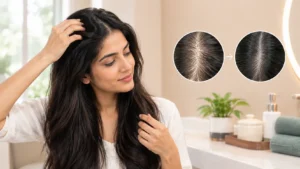
GFC/PRP Hair Therapy
Concentrated growth factors from the patient's own blood, reintroduced into the scalp to support miniaturising follicles.
Explore GFC/PRP Hair Therapy →GFC/PRP Skin Therapy
Growth factors delivered directly into the skin to support genuine cellular repair for texture, scarring and early ageing.
Explore GFC/PRP Skin Therapy →Exosomes: The Language of Cellular Communication
Exosomes have generated enormous interest in regenerative aesthetics. But what exactly are they?
Exosomes are a subtype of extracellular vesicles released by cells. They are involved in communication between cells and can carry biological cargo such as proteins, lipids and nucleic-acid-related material.
In simple terms:
This is what makes exosomes scientifically fascinating. Rather than simply adding a substance that occupies space, the concept is about biological messaging. Research is investigating how extracellular-vesicle signalling may influence processes such as:
- Cellular proliferation
- Angiogenesis
- Inflammation
- Tissue repair
- Extracellular-matrix remodelling
- Follicular signalling
Exosomes and Skin
In skin rejuvenation, exosome-based approaches are being investigated for their potential role in supporting:
Signalling → repair → remodelling → skin quality
Research areas include photodamaged skin, wound healing, pigmentation, scarring and overall skin quality. However, this is an area where marketing can run considerably faster than clinical evidence.
Exosomes and Hair
The hair follicle is a complex biological ecosystem involving the dermal papilla, follicular stem-cell niche, keratinocytes and multiple signalling pathways. Exosome research is investigating whether extracellular-vesicle signalling can influence the follicular environment and pathways associated with hair growth.
This is promising - but promising does not mean proven for every product or every patient.
Why "Not All Exosomes Are the Same" Matters
The word exosome does not automatically tell us:
- Where the product came from
- How it was manufactured
- How it was purified
- What cargo it contains
- Whether it has been adequately characterised
- Whether its potency has been established
- How stable it is
- Whether it is sterile
- What evidence supports its intended use
Therefore, product quality and manufacturing are central to the clinical conversation.
- "Stem cells without stem cells."
- "Permanent hair regeneration."
- "Guaranteed collagen production."
- "No side effects."

Exosome Hair Restoration
A blood-draw-free regenerative option using cell-signalling nanoparticles to activate dormant follicles and improve scalp microcirculation.
Explore Exosome Hair Restoration →Exosome Skin Rejuvenation
A regenerative option that stimulates repair at molecular level to improves texture, elasticity, pigmentation, fine lines, and overall radiance.
Explore Exosome Skin Rejuvenation →PDRN: The Repair Signal
PDRN stands for polydeoxyribonucleotide, a preparation consisting of DNA fragments associated with tissue-repair biology.
Its story is particularly interesting because PDRN did not originate simply as a beauty trend. Its biological rationale is connected to tissue repair and wound-healing processes.
A simplified model:
One proposed mechanism involves adenosine A₂A receptor-related signalling, while nucleotide salvage is another component of the proposed biology.
The important message is that PDRN is not a filler. It is better understood as a treatment whose proposed benefits relate to repair and tissue quality, rather than simply adding volume.
PDRN vs PN: An Important Distinction
PDRN and PN (polynucleotides) are often used interchangeably in aesthetic marketing, but they should not simply be treated as identical terms. They are related nucleic-acid-based materials, but their molecular characteristics, formulations, products and clinical applications can differ.
For clinicians, the important question is not merely:
"Is it PDRN?"
but:
"What is the actual product, its composition, indication, evidence and regulatory status?"

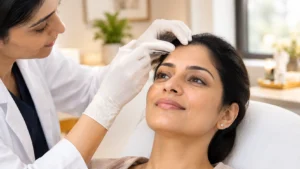
PN/PDRN Under-Eye Treatment
A regenerative, non-surgical treatment for hollow, dull or perpetually tired-looking under-eyes - addressing skin quality rather than masking it.
Explore PN/PDRN Treatment →So Which Is Better?
This is probably the wrong question. There is no universal winner.
Instead, ask:
What are we treating?
Then ask:
What is the underlying biology?
And finally:
Which intervention has the best evidence for this particular patient and indication?
This is the fundamental principle of regenerative aesthetics:
GFC vs Exosomes vs PDRN at a Glance
| Treatment | The Central Idea | The Key Questions to Ask |
|---|---|---|
| GFC | Harness the patient's own growth-factor signals | Preparation method, concentration, protocol and patient selection |
| Exosomes | Influence cellular communication through extracellular vesicles | Product source, manufacturing, characterisation, potency, safety and clinical evidence |
| PDRN | Support biological pathways associated with tissue repair | Specific indication, formulation, protocol and strength of clinical evidence |
Science vs Hype: The Most Important Conversation
Regenerative aesthetics is exciting precisely because the biology is exciting. But a biological mechanism does not automatically guarantee a dramatic clinical result.
Science
We know that:
- Growth factors participate in tissue repair and cellular signalling.
- Extracellular vesicles participate in cell-to-cell communication.
- PDRN has biological pathways associated with tissue repair.
- Regenerative approaches are being actively investigated in dermatology and hair medicine.
Evidence Is Still Evolving
Important questions remain around:
This is particularly relevant for newer technologies and commercially diverse products.
- "Guaranteed results."
- "Permanent regeneration."
- "Zero risk."
- "Works for everyone."
- "Replaces conventional treatment."
The more extraordinary the claim, the more important it becomes to ask:
Where is the evidence?
The Future of Regenerative Aesthetics
The future is unlikely to be about finding one miracle molecule. Instead, it will be about understanding the patient's biology and selecting the appropriate intervention.
A thoughtful regenerative approach looks like:
This approach is far more meaningful than simply following the newest aesthetic trend.
The Krity 360 Perspective
At Krity 360, regenerative aesthetics should be approached as an extension of sound clinical diagnosis - not as a collection of fashionable procedures. GFC, exosomes and PDRN each represent an interesting way of thinking about regeneration:
But none should be presented as a miracle solution. The goal is not to promise the most dramatic transformation. The goal is to understand which biological strategy makes sense for which patient, use appropriate evidence and communicate honestly about what we know - and what we still don't know.
"The future of aesthetics will not belong to the treatment with the biggest claim. It will belong to the clinician who understands the biology behind the claim."
Regenerative aesthetics is moving from filling and fixing toward signalling, repairing and remodelling. That is exciting. But the most sophisticated approach is not to believe every new technology. It is to remain curious and critical.
Curious Which Biological Strategy Is Right for You?
A consultation at Krity 360 starts with a proper diagnosis - not a treatment sold before your biology has been understood.
Krity 360 | 34/5, Aadeshwar Chambers, Kasavanahalli Main Road, 1st Cross Road, Bengaluru, Karnataka 560035 | +91 93807 89495
More Researched-Based Articles
The Executive Edge: What Bangalore's Professional Men Are Quietly Doing
Read Article →This blog is for informational purposes. It does not constitute medical advice. Please consult a qualified medical professional for diagnosis and treatment decisions.