Companion Article - Part 1
The Athlete’s Hair: Why Elite Training Thins Your Follicles
Clinical Insight - Part 2
The Athlete's Hair:
Why Elite Training
Thins Your Follicles
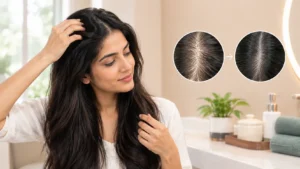
Cortisol-driven telogen effluvium, iron deficiency, the whey protein → DHT pathway, and mechanical trauma - hair loss in endurance athletes is under-discussed and over-attributed to genetics. The research tells a more actionable story.
The Problem
Your training builds muscle.
It also dismantles follicles.
Hair loss in endurance athletes is rarely discussed in sports medicine and is too often dismissed as genetics by athletes themselves. The research presents a more nuanced - and ultimately more actionable - picture: three distinct mechanisms operate on different timescales and respond to different interventions.
Understanding which mechanism is primary in your presentation is the critical diagnostic step. Cortisol-mediated follicular disruption, nutritional deficiency (particularly iron), and androgen pathway activation from supplementation each create distinct hair loss patterns. This article maps the science to clinical solutions available at Krity 360, with specific attention to the Indian athlete context where iron deficiency prevalence and genetic AGA predisposition compound the physiological stress of training.
Part One
The Mechanisms: How Training Disrupts the Follicle
Hair follicles are exquisitely sensitive to systemic physiological signals. They respond to cortisol levels, circulating iron and micronutrient concentrations, androgen receptor activation, and local scalp blood flow. When training volume exceeds the body's capacity to maintain homeostasis in these domains, follicles shift from anagen (growth) to telogen (resting), resulting in diffuse shedding or - in genetically predisposed individuals - accelerated pattern baldness.
Mechanism 1: Cortisol-Driven Telogen Effluvium
Skoluda et al. measured hair cortisol concentrations - a biomarker representing months of integrated cortisol exposure - and found significantly higher levels in endurance athletes than in non-athletes, scaling with training volume.[1] Chronically elevated cortisol pushes hair follicles prematurely from anagen into telogen, resulting in diffuse shedding - telogen effluvium (TE) - characteristically appearing 6-12 weeks after the stressor.
In periodised athletes, this often manifests as post-race or post-heavy training block shedding that is mistaken for genetically-driven alopecia. The hair loss is reactive, not progressive, and responds to structured recovery: managed cortisol through sleep optimisation, adequate nutrition, and psychological stress management. Clinical support during predictable effluvium windows (post-major race, post-overtraining block) is the primary intervention.
Mechanism 2: Nutritional Deficiency - The Hidden Driver
Iron deficiency is the most prevalent and clinically impactful nutritional cause of hair loss in endurance athletes. In Indian premenopausal women - where national iron deficiency anaemia prevalence approaches 50-60% - the compounding effect of high training volume (which depletes iron through gastrointestinal microbleeding, foot-strike haemolysis, and menstrual losses) creates ferritin levels that fall well below the threshold for follicular function.
Research consensus places the minimum ferritin level for normal hair cycling at 40-70 ng/mL; levels below this threshold correlate with progressive diffuse thinning.[2] In athletes, the clinical presentation is often subtle: the hair does not fall out in clumps but becomes progressively finer, with reduced density and increased fragility.
Vitamin D deficiency is pervasive across Indian athletes despite high sun exposure - attributable to sunscreen use, melanin-mediated UV-D conversion inefficiency, and vegetarian diets low in D3 sources. Deficiency below 30 ng/mL is associated with diffuse thinning and dysregulated follicular cycling. Zinc, biotin, and protein deficiency - particularly in athletes practising RED-S (Relative Energy Deficiency in Sport) - complete the nutritional triad most commonly implicated in exercise-related hair loss.
Mechanism 3: The Supplement-to-DHT Pathway
This is the mechanism most frequently unrecognised by athletes until its consequences are irreversible. Whey protein supplementation at the volumes common in Indian urban gym culture elevates circulating IGF-1, which drives 5-alpha-reductase activity in dermal papilla cells, converting testosterone to dihydrotestosterone (DHT) - the principal androgen responsible for follicle miniaturisation in androgenetic alopecia (AGA).[3]
The Indian Dermatology Online Journal (2024) documents this pathway explicitly in the Indian clinical population: "Bulging biceps, spotty skin, and hairless heads are markers of a patient on whey protein for a long time."[3] In genetically predisposed men (and AGA in Indian men has significant genetic prevalence), this accelerates the natural AGA timeline by a clinically meaningful margin.
Anabolic-androgenic steroid (AAS) use magnifies this effect catastrophically. Exogenous androgens flood the system with substrate for 5-alpha-reductase, and AAS-induced AGA in young men (18-30) can progress from normal hairline to severe recession in 12-18 months of sustained use. In women, AAS use produces female-pattern hair loss (FPHL) alongside paradoxical body and facial hair gain - a combination that is distressing and, if untreated, partially permanent.[4]
Mechanical & Environmental Factors
Traction alopecia from tight training ponytails, braids, and headbands causes tension at the frontal and temporal hairline that, with daily repetition, leads to follicular atrophy. This is predominantly documented in female athletes but applies to any athlete using tight elasticated headbands consistently.
Helmet-wearing in cyclists creates a warm, occluded microenvironment on the scalp, promoting Malassezia overgrowth (seborrheic dermatitis), folliculitis, and localised strap-related traction along the temporal hairline. Chlorinated pool water oxidises keratin cystine bonds in the hair shaft, increasing porosity, reducing tensile strength, and causing progressive structural brittleness in competitive swimmers.
📈
Cortisol-Driven TE
Chronically elevated cortisol from high training loads pushes follicles from anagen to telogen, producing diffuse shedding 6-12 weeks post-stressor.
Hair cortisol ↑ in endurance athletes vs. controls
🩸
Iron Deficiency
Ferritin below 40-70 ng/mL compromises follicle cycling. Prevalent in Indian female athletes (50-60% national anaemia prevalence).
Minimum ferritin for hair: 40-70 ng/mL
💊
Whey → DHT Pathway
Whey protein elevates IGF-1, driving 5-alpha-reductase and DHT conversion, accelerating AGA in genetically predisposed individuals.
Documented: IDOJ 2024, PMC10969252
💉
AAS-Induced AGA
Anabolic steroids flood the system with exogenous androgens, producing severe, rapid-onset AGA in men and FPHL in women.
12-18 month progression from normal to severe
🧵
Traction Alopecia
Tight ponytails, braids, headbands cause follicular atrophy at frontal/temporal hairline with daily repetition.
Predominantly female athletes; helmet straps
🏊
Chlorine Damage
Oxidises keratin cystine bonds, increasing porosity and brittleness. Scalp folliculitis from helmet occlusion.
Structural hair damage in swimmers
"Bulging biceps, spotty skin, and hairless heads are markers of a patient on whey protein for a long time."- Indian Dermatology Online Journal, 2024 (PMC10969252) - Cutaneous Side Effects of Sports Supplements
The specificity of this clinical observation - an India-based dermatology publication documenting a presentation pattern now familiar to specialists in metro cities - underscores that this is not a theoretical concern imported from Western sports medicine literature. It is happening in Bengaluru, Mumbai, and Delhi gyms, and it is presenting in Indian dermatology clinics with increasing frequency.
Clinical Response
Protecting & Restoring
the Athlete's Hair
Hair loss interventions for athletes must be protocol-aware: treatments effective for garden-variety androgenetic alopecia may require modification for athletes in high cortisol states, nutritionally marginal, or using supplementation that is actively driving the androgenic pathway. The treatment selection below maps to the three primary mechanisms identified.
For Telogen Effluvium & Nutritional Hair Loss
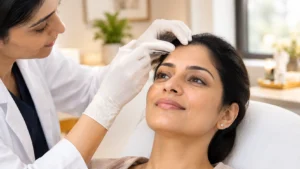
Mesotherapy — Nutritional Delivery Directly to the Follicle
Mesotherapy delivers a precisely formulated cocktail of vitamins (biotin, B-complex, vitamin D analogs), minerals (zinc, iron, selenium), amino acids, and hair-specific growth factors via micro-injections into the scalp's mesodermal layer - bypassing systemic metabolic pathways that cause oral supplementation to deliver only a fraction of the intended dose to the follicle.
For endurance athletes with TE driven by iron deficiency, training stress, or nutritional insufficiency, hair mesotherapy sessions (typically monthly, for 3-6 months) directly address the follicular deprivation that systemic oral supplements cannot reliably correct in athletes with high metabolic turnover. This is the clinical bridge between nutritional deficiency and active follicle rescue.
Krity 360: Hair Mesotherapy →For Androgenetic Alopecia - Supplement or Steroid Driven
GFC & PRP for Hair - Reversing Follicular Miniaturisation
Growth Factor Concentrate and Platelet-Rich Plasma for the scalp work through a fundamentally different mechanism from cosmetic hair treatments: they directly stimulate dermal papilla cells - the biological command centre of the hair follicle - with a concentrated autologous growth factor signal (VEGF, PDGF, IGF-1 at controlled physiological concentrations, EGF) that counteracts the miniaturisation driven by chronic DHT exposure.
For athletes whose AGA has been accelerated by whey protein or testosterone-boosting supplementation, a structured course of GFC/PRP sessions (4-6 sessions, monthly) can interrupt and partially reverse the miniaturisation cascade, particularly when the supplement driver has been eliminated. Results are most significant in the early-to-moderate stages of recession; this is the clinical argument for early intervention rather than watchful waiting.
Krity 360: GFC & PRP for Hair →Exosome Therapy for Hair - Activating Dormant Follicles
For athletes in whom conventional GFC/PRP has reached diminishing returns - or in whom follicular dormancy from prolonged DHT exposure, cortisol stress, or chlorine-related scalp damage has rendered follicles non-responsive to first-line regenerative approaches - exosome therapy delivers a more potent regenerative signal.
Stem-cell-derived exosomes contain microRNA sequences that can modulate gene expression in dermal papilla cells, reactivating quiescent follicles and stimulating density and thickness improvements over a 2-3 month course. At Krity 360, exosome treatment is deployed via scalp injection or microneedling-assisted delivery, typically in 3-4 sessions. Safe across all skin and hair types, with no risk of rejection given the cell-free composition.
Krity 360: Exosome Therapy for Hair →For Advanced or Irreversible Alopecia
Hair Transplant Surgery - The Definitive Solution
When follicular miniaturisation from chronic AGA - whether genetic or supplement-accelerated - has progressed to the point where regenerative treatments can no longer stimulate viable follicle recovery, hair transplant surgery provides the definitive structural restoration. For the athlete, the surgical precision of follicular unit extraction (FUE) allows natural-looking density restoration without linear scarring, with a recovery window that can be planned around training calendars.
The key clinical consideration for athletes considering transplantation: the driving cause of AGA must be identified and eliminated (supplementation changed, AAS discontinued) before surgery, otherwise transplanted follicles remain vulnerable to the same androgenic insult driving the original loss.
Krity 360: Hair Transplant Surgery →The First Consultation: What Athletes Should Tell Their Clinician
To enable accurate diagnosis and correct treatment selection, athletes presenting for hair loss evaluation at Krity 360 should be prepared to disclose the following:
Training context: Weekly training volume and sport type; recent major race or heavy training block; whether loss is diffuse or patterned.
Supplementation: Current use of whey protein, BCAAs, creatine, testosterone boosters, and any anabolic agents. Dosage and duration matter.
Bloodwork: Last serum ferritin, vitamin D, and zinc levels (if available).
Female athletes: Menstrual regularity (irregularity suggests RED-S, a major driver of TE).
This clinical context is what separates an effective treatment protocol from a generic response.
Reference Framework
The Athlete's Hair Maintenance Protocol
| Concern | Primary Cause | Recommended Krity 360 Treatment | Timing |
|---|---|---|---|
| Telogen effluvium - cortisol / nutritional | High training load, iron deficiency, RED-S | Scalp Mesotherapy + GFC/PRP for Hair | 4-8 weeks post-triggering event |
| AGA - supplement or androgen driven | Whey protein, testosterone boosters, AAS | GFC/PRP for Hair + Exosome Therapy (after supplement review) | Early intervention; ongoing |
| Advanced / established AGA | Chronic DHT exposure, genetic predisposition | Hair Transplant Surgery (after cause elimination) | Planned around training calendar |
| Scalp folliculitis / seborrheic dermatitis | Helmet occlusion, sweat, chlorine | Mesotherapy + scalp hygiene protocol guidance | Active management throughout |
| Structural hair damage (swimmers) | Chlorine oxidation of keratin bonds | Scalp Mesotherapy + pre-swim barrier strategies | During competitive season |
| Traction alopecia (female athletes) | Tight ponytails, braids, headbands | Exosome Therapy + hairstyle modification counseling | Early intervention critical |
This table is intended as a reference framework and does not constitute individual medical advice. Specific treatment selection should be determined in consultation with a Krity 360 clinician following a comprehensive assessment of the athlete's training profile, supplementation, bloodwork, and hair loss pattern.
Research References
- Skoluda N et al. Hair cortisol concentrations in endurance athletes versus non-athletes. Referenced in: Aventus Clinic clinical review on athletic hair loss, 2025.
- Rushton DH. (2002). Nutritional factors and hair loss. Clinical and Experimental Dermatology, 27(5):396-404. PMID: 12190640
- Cutaneous side effects of sports supplements. (2024). Indian Dermatology Online Journal. PMC10969252
- Furth G et al. (2023). Cutaneous manifestations of AAS use in bodybuilders. JMIR Dermatology. doi: 10.2196/43020
- Choi J et al. (2017). The association between exercise and androgenetic alopecia. Annals of Dermatology. PMC5500728
- Muhaidat NM et al. (2024). Whey protein supplements and acne vulgaris: a case-control study. Journal of Cosmetic Dermatology. PMC11022506
- Pontes TC et al. (2013). Incidence of acne in protein supplement users. Anais Brasileiros de Dermatologia. PMC3900340